Reverend Gerald Dillenbeck, MDiv MPA
2025 Congregational Study Action Issue, Unitarian Universalist Association
When democratic gratitude
performs with politically positive
caste-transformative attitude
Then autocratic certitude
and kleptocratic magnitude
do not negatively deform
with unenlightened
and disempowering
caste-preserving platitudes.
The U.S. inter-religious sector seeks caste-abolishing strategies through deep embodied listening and multicultural learning experiences. This inter-religious theological reflection intentionally includes, and gives deferential voice, to Earth’s dissociated constituents, acutely targeted, and chronically triggered, by caste-preserving harm.
These trauma-informed relationships have led many people of faith to believe our global religious associations must be transformed, not merely reformed, by dismantling systemic trauma endemic to an upper-caste dissociative “prison-industrial complex.” To this progressively resilient end, humanity actively hopes for a caste-abolishing, compassionately communicating, “more perfect union.”
Those wounded by “lesser-than” trauma histories challenge the inter-religious sector’s integrity. Sacred ecology invites democratizing intention to transform caste-preserving trauma with caste-abolishing compassionate communication strategies; words and ways to restore universal Earth Justice, and unitarian anthropocentric peace.
- What is our theology of sin and redemption? Of repentance and repair?
The Gaia Hypothesis proposes that living organisms and their inorganic surroundings on Earth form a self-regulating, complex system that maintains conditions for life. (Wikipedia.org)
Original sin, like a crack bifurcating the Taoist symbol of sacred synergy, severs Gaia’s Original Yang/Yin symbiotic relationship, thereby dividing what composed Gaia’s therapeutic co-redeeming system. Wounded womb pain and loss, loneliness and dissociation, dissonance and chaos, present negative feelings of dispassion. So too, pleasure and gain, belonging and association, resonance and polycultural complexity present positive feelings. Together, these dark negatives and light positives potentially balance sacred Gaia-regulating ecological and neurological compassion, reconnection, revival, re-ligion, re-associative healing.
Throughout indigenous wisdom Origin Stories, original sin is iconically represented by disempowering risks of a traumatically severing crack, and enlightened opportunity in co-redemptive Prime CoBinary Relationship. Light and dark, full and empty, top and bottom, iconic in the Taoist bihemispheric black/white symbol. Both of these, survival risk and thrival opportunity, held paradoxically together within a cosmic GaiaMother’s nurturing, yet nutritionally wounded, egg-womb.
With dispassioned, unpleasant risks of losing healthy interdependence comes integrity’s reverse compassioned, pleasing potential. Symbiotic Gaia reweaves, restores, redeems cosmic cobinary balance, Yang/Yin synergy. This regenerative double-bind restores wellbeing to a fragmented bipolar, anthropological v ecological, crack. This primordial “crack” was pantheistically perceived through experiencing regenerative fertility, and degenerative futility.
These two, caste apart competition and caste together cooperation, present a multisensory co-arising trauma-cause v therapy-effect reiteratively unresolved communication cycle. Caste together as a dipolar prime relationship (e.g. Taoism’s YangMountain and YinValley), each re-associative worldview encompasses, but is not limited to, a felt awareness of risk aversion. Averting risky feelings anticipates opportunity conversion; exhaling dis-formation to inhale transformation. Caste-abolition strategies engage co-redemptive ideations.
PassionateMind/PleasureBody symbiotic transformative consciousness articulates nondualistic Buddha “I-I”, expanding outward to include nonviolent Sangha “We,” AnthroMind/EarthBody engages verbal-Crown/nonverbal-Root communing Dharma.
Definitions:
Monotheism–the belief that there is only one God and humanity was created in His image
Polytheism–belief in more than one god
Pantheism–belief that “god” does not refer to a person, place, or thing; and does refer to all interdependent relationships within a self-regulating universe
Panentheism–belief that “god” transcends a polyculturally regulated natural universe (e.g. Gaia) and also immanently includes interdependent relationships within this self-regulating universe
Animism–belief that all regenerative life-systems are interdependently produced by a synergetic spiritual (metaphysical) intent that empowers physical interdependent relationships. Animism and Panentheism are commensurable belief systems.
Humanism–belief that human nature, dignity, intelligence, and metaphysical ideals are sufficient for self-regulation, without recourse to theistic supernaturalism. This often includes the belief that “God” was created in an anthropocentric image.
2. How does centering love ask us to respond to a public theology that is based on punishment, revenge, violence, coercion, and dehumanization?
An anthropomorphic SunFather God, creator of Man, is made in His own, monotheistic, upper-caste Chosen People image. By cosmological comparison, a pantheistic EarthMother Gaia compassionately pleases SunFather’s universally cooperative enlightenment. Yang-God’s transcendent orthodoxy prevailing upon indigenous Yin-Gaia’s indigenous orthopraxis.
Reflecting on this question’s list of stressful, anxious, depressing trauma triggers, these fear- and/or anger-embodied strategies defend YangSelf v YinOther dispassion and non-communication. I feel anxious, neurologically ‘bad’ experiences that happen to at-risk Us v in-power Them,” multigenerational historic remembering. This multigenerational re-connecting engages strategies to avoid unhealthy, unloving, dissociative wants and dispassionate needs. Dispassionate intent, as evinced by anthropocentric history, contributes to perpetuating Winner-Us v Loser-Them systemic trauma. Transgenerational experiences of inward-neurosystemic and outward-ecosystemic trauma further disintegrate therapeutic hope for transformative love reconnections. Mindful commitment to pantheistically polyamorous association experiences transforms upper v lower, lighter v darker caste dissociative ideation. Sacred EarthTribe communion experiences restore polyculturally healthy communication and organically felt belonging.
Picture the Taoist Yang/Yin circle, with Yang on your right, caste in enlightening White, and Yin caste on your left, in empowering Black. Notice that Yang is crown-upper dominant and Yin is root-lower prominent.
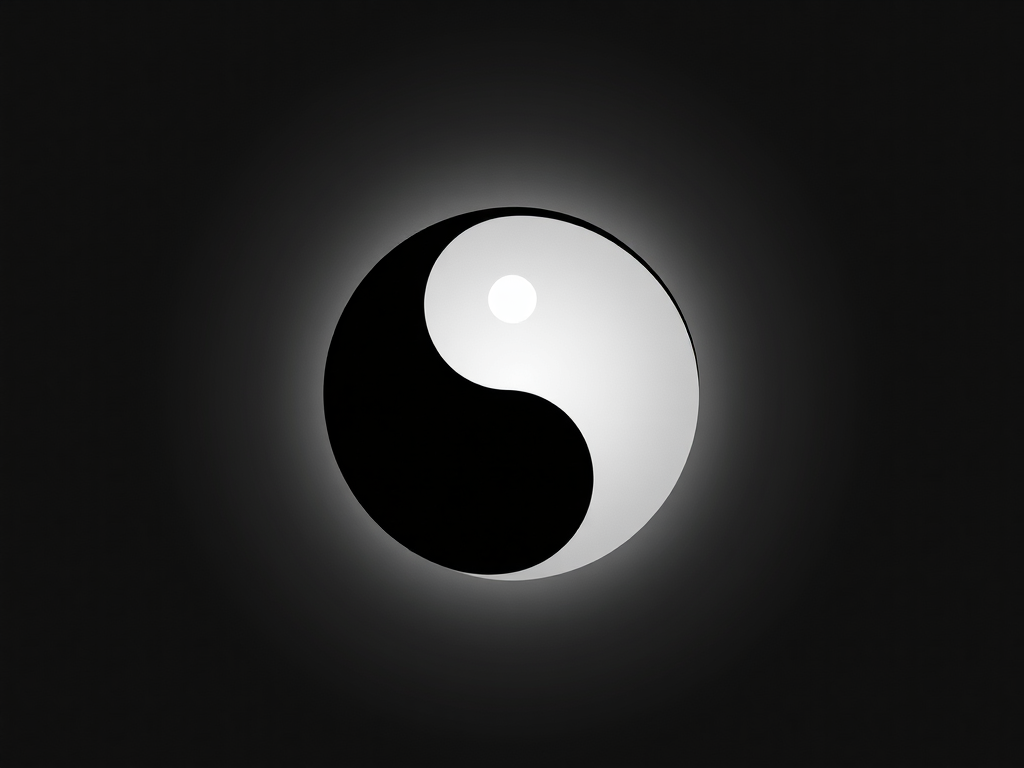
A bi-polarized win v lose, monotheistic caste-preserving, Yang-Crown orthodox chakra oppositionally competes against a dipolar win/win, panentheistic caste-abolishing Yin-Root orthopraxis chakra. In reverse turn, our pantheistic awareness of safe MotherGaia belonging is appositionally unopposed to a cobinary symbiotic relationship with FatherSun, as two-dimensionally pictured above.
Robust compassion unconditionally extends warm panentheistic feelings of organically belonging together. Organic root-bodies with sacred crown-minds co-redemptively respond to caste-preserving displeasure/dispassion trauma. This systemic trauma includes past neurosystemically felt unsafe and unwoke “lesser-than” harm, scapegoating. Sacred Us v Sinner Them political views derive from irreligious dissociation, paranoia, conspiracy theories, rabidity, fear-anger-freeze dissonant miscommunications. From a monotheistically universal view, Anthropocene caste preservation is necessarily anti-polytheistic, anti-polycultural belonging, anti-healthy multicultural democracy, anti-holistic wellbeing. Light CrownPassion v Dark RootPleasure repeats a binary caste-segregating original dissociative sin.
3. How do we live our covenant declaration that “every person is inherently worthy and has the right to flourish with dignity, love, and compassion?”
David Bohm, in On Dialogue, concerned with “We” (Sangha) practices observes, “the world is in the dire state it is because of too much self-centered, fractured, fragmented thinking, and a new way of thinking [communicating?], driven by dialogue, where we suspend assumptions and judgments, participate honestly and transparently, and stay connected, would open the door to more authentic, real, creative thinking [regenerative living?] capable of dealing with the world crisis.” (Wilbur, The Religion of Tomorrow, p. 617)
Natural law and natural order values expressed by authentically religious (reconnecting) declarations universally agree that every individual sentient organism flourishes in loving and compassionate relationships. The reverse corollary, no individual sentient organism can optimally flourish in unloving and dispassionate absence of healthy interdependent relationships.
Our most ancient indigenous wisdom, including universal-yangMind and unitarian-yinBody Taoism, supports this religiously held experience, that each individual sentient organism (person, being), lives spiritual-mind/natural-body values when we communicate, verbally and nonverbally, on the side of loving, compassionately listening, co-empathic interrelationships. All individual sentient beings and species voice and act unnatural and dispassionate disvalues when we dis-communicate on the “upper” caste-preserving side, triggering fear, anger, chronic stress, heightened anxiety, neurosystemic and ecosystemic bipolarizing rabidity.
By systemic theological extension, monotheistic HumanNature concepts are antithetical to polyamorous DivineSpirit “worthy” cognitive voices. By contrast, pantheistically inclusive, intuitive Me/We body choices (cobinary root-pleasure) reconcile cooperatively interdependent “woke-hope” persons.
Stepping into a panentheistic sacred ecology worldview, we might ask how we can heal “upper” mind-caste v “lower” body-caste competitive dissociation, personally and politically. This felt need for integrity invokes indigenous desire to effectively and profusely reconnect RootBody v CrownMind Original Sin perennial issues. Upper v lower, winner v loser, caste-segregation. Neuro-sensory reproductive organisms normatively experience a universal need for belonging, a unitarian want to feel health safety.
We might imagine, and continuously re-imagine, a more expansively resonant, thriving caste-abolishing covenant. We might remember our constitutional commitment to a more inclusively democratic crown/root re-association. We could regenerate YangPassion/YinPleasure, enlightening and empowering win/win inter-religious strategies. These are pantheistic nonviolent communications reviving, thriving, flourishing, dignifying an internal health-climate of love, and an environmental wealth-culture of compassionate belonging.
4. What does Universalism–the notion that we are all saved by being reconciled with a love greater than our sins–mean in the 21st century? How do we live this part of our faith heritage?
“For the first time in history, virtually all of our truly serious and wicked problems are global in nature. Even fifty years ago, if a nation were facing seerious problems, it could take actions itself to ameliorate them. Today, most serious problems are such that actions taken by any single nation are largely worthless–almost all nationa have to participate: the problem is global, the solution must be global.” (Wilbur, The Religion of Tomorrow, p. 622)
Universal Salvation is historically, and more specifically, UU associated with the crown-jewel notion that we are all saved through reconciliation with a MONOTHEISTIC love greater than our sins. Monotheism and anthropocentrism are two faces of the “man is made in God’s image,” so it logically follows that GodTalk images a divinely inspired “upper-caste” man. This transcendent salvation position is in hierarchical contrast to all othered, “lower-caste” dissociated, organic beings. In this emergent 21st century of the Great Turning Anthropocene, original Chosen People sin more clearly stands us apart from our Whole GaiaEarth panentheistic roots, in Unitarian Co-Redemption.
To paraphrase Albert Einstein: “We cannot solve our [upper-caste preservation] problems with the same thinking we used when we created [lower-caste dissociation] problems.”
Polytheistic WE integrity transforms our universal monotheistic trauma history by abolishing dissociative upper-monotheistic Us v lower-polytheistic Them. Monocultural climate trauma awakens restorative win/win polycultural opportunities. Just as natural body pleasures multigenerationally inform spiritual mind passions, so too pantheistic root chakra’s intuitive feelings preverbally inform crown chakra’s monotheistic cognitions. Unitarian felt Roots feed universal Crown dialogue; nondualistic, nonviolent, verbal/nonverbal therapeutic communication strategies.
Within UU polytheistic intention, this might feel like giving more weight to our Unitarian notion that we are bodhisattva healed through appropriately sharing peak associative-felt experiences, both public and personal, both sacred and organic, both impassioned and pleasing, both enlightened and empowering. In this unprecedented critical Anthropocene climate event, we are urgently and integrally called to primordial compassionate caste-transforming communication, and not anthropocentric “caste-preserving” dispassionate dis-communication.
5. What does it mean to proclaim a theology that no one–no matter what they have done or been accused of doing–is disposable? [without adverse neurological and ecological consequences]
If malevolent roses
were blue passioned red
And malicious violets
were red pleasing blue
Then contentious autocracy
would have a whole lot less
malgovernance to do.
Peter Morales’s essay “Religious Hospitality” (UUA of Congregations, 2006) offers a theological perspective that we are challenged to practice radically inclusive hospitality. From a bodhisattva perspective, the welfare of all sentient beings is immanent and interdependent. No one can achieve the fullness of compassion, pleasure, resilient peace, until this is the explicit therapeutic intent of everyone. The Christian gospels ask, if we only actively love those we do not perceive as our adversaries, without intent to practice radically democratic hospitality, then how are religious people fully engaging Gaia’s panentheistic potential for caste-abolishing integrity, and beauty, grace, peace–all the fruits of our Holy Nature/Spirit.
Morales describes hospitality as a spiritual discipline, verbally and nonverbally communicated with, and not against, others. Hospitality expresses spiritual health within those who feel empowered and perceive compassionately enlightened practice in host and guest (not parasite) co-empathic intelligence.
“If I feel angry, hurt, unloved, or alienated I cannot offer a[n unconditional] warm welcome. Conversely, if I am at peace, filled with joy at being alive, aware of those around me with compassion in my heart, then hospitality flows naturally and inevitably from the depths of my being.”
The challenge of resiliently and unconditionally loving those who may react against us as if we were disposable, as if our lives matter less than their own, as if irreligious, dissociative behavior and attitudes were reasonable and healthy, too often perpetuates systemic Us v Them, Winner v Loser, Upper v Lower trauma.
Compassionate communications, unlike dispassionate dis-communications, strengthen win/win caste-abolishing messages to and from interdependent persons, associations, states and nations, and species. Reaching out with co-redemptive intention “frees us from individualism and narcissism,” and evangelical nationalism, monoculturally anthropocentric capitalism, and the caste-preserving exceptionalism of our rabidly polarizing Anthropocene.
6. How do we teach children about Unitarian Universalist theological claims and work with them to embody them?
From a Taoist–UU theological perspective, we all most deeply learn, especially preverbal infants and toddlers, from embodied experience. More mature spiritual/sexual bodies, also more expansively learn from compassionately communicating with other trusted and trusting sentient beings about their own upper v lower caste dissonance, and lower/upper resonant experiences, including peak multisensory crown/root-tpanentheistic pleasures in synergetic climax experiences.
Taoist metaphysics, an indigenous wisdom tradition, is nondualistic. Paradoxical “midway” wisdom sonnets advocate Yin/Yang Win/Win co-arising dipolarity, which stands in cooperative contrast to Yang v Yin, Win-Upper v Lose-Lower co-reactive bipolar dissonance.
If panentheistic (spirit-transcendent/nature-immanent) wisdom distinguishes between sexual eros feelings and sensitive ethos thoughts, this may be an artifact of translating neurosensory nonverbal experiences into verbalizable constructs. In Origin Narratives, sexually safe and gender belonging feelings normatively integrate love-passion/health-pleasure at the sacrum-sacral core of root-chakra integrity. This win/win interdependent web of neuro-sexual spiritual life, is in remarkable nondualistic contrast to a monotheistic-anthropocentric dissociative mortal-body v immortal-mind. The Original Sin of YangCrown v YinRoot, like flawed human-nature v perfect divine-spirit, defends and preserves “lower” v “upper” caste carnality v sanctity.
In monotheistic prehistoric traditions, children were on the out-caste side of “lesser,” with women, especially unfertile women, un-sacred but sexualized capital-producing slave property, “disabled” neurodiverse people, “wild” animals, weeds, vermin, unfertile soil. Survivalist evolutionary theory forecasts a “higher”-caste hierarchy ruling-over those who are “lower”-caste. A thrivalist transformative Tao reweaves a beneficent (graced, blessed, virtuous) panentheistic ruling-with polyamorous neuro/ecotherapeutic culture.
Universal monotheism positively correlates with anthropocentric caste-privileged, stable, unchanging GodThesis orthodoxy. This transcendent messianic God is made in man’s exceptionally privileged image, and vice-versa. Prosperous patriarchy is virtuously made in God’s omnisciently pervasive, caste-conserving, entitled autocratic ruler, retributively jealous judge images.
Unitarian polytheism positively correlates with Gaia Hypothesis caste-abolishing, polyamorously fluid ecotherapeutic orthopraxis. This immanent bodhisattva Goddess gives natural/spiritual birth, and rebirth, to all organically neuro-sexsensory, sacredly synergetic, inter-religious crown/root-chakra, caste-liberating, healthy democratic, restorative healing Earth Tribes.
Compassionate communication, verbally resonant and nonverbally resilient, about cobinary nature spirituality grows polytheistically and polyculturally confluent. Passion sensitive and pleasure sensory communication integrates essential teaching and learning. Embodied spiritual connection engages humanity’s authentically religious EarthCentered unitarian life force. While talking about complex ethotic/erotic neurosensory experience, in a safe-and-belonging trust environment, is useful for sharing and expanding individual cobinary comprehension, we know from too much irreligiously dissociative experience, that talking the pleasure talk, without also walking the whole, holy, and holistic ecotherapeutic compassion walk, will not resiliently transform our upper v lower caste issues, personally or politically, locally or globally.
Those who have substantial chronic trauma histories living in the over-caste monotheistic shadow of disregard for cobinary depolarizing passion/pleasure win/win cooperative power analysis may benefit from group explorations of Yang transcendent and Yin-immanent lists.
First, explore how these concepts are often dissociated as polarizing, caste-preserving win v lose universal oppositions.
Second, discuss how these same concepts might also form a double-binding list of caste-abolishing win/win unitarian appositions.
| Yang Animus Form | Yin Anima Flow |
|---|---|
| SunFather | EarthMother |
| 1-man | 0-woman |
| Mountain | Valley |
| Crown | Root |
| Sage-cognitive perception | Muse-intuitive reception |
| Heaven | Earth |
| Transcendent Messiah | Immanent Bodhisattva |
| Patriarchal enlightenment | Matriarchal empowerment |
| Left Hemisphere—verbal thought | Right Hemisphere—nonverbal feeling |
| Discontinuous articulation | Continuous integration |
| Monotheistic/Monoculture | Polytheistic/Polyculture |
| Anthropocentric | EarthCentric |
| Bipolar competition | Dipolar cooperation |
| Caste dissociation-vertical | Caste association-horizontal |
| Sacred-spiritual orthodoxy | Organic-natural orthopraxis |
| Mind Passion | Body Pleasure |
| God MonoThesis | Gaia HypoThesis |
BIBLIOGRAPHY
Gregory Bateson, Mind and Nature: A Necessary Unity, 1979, Dutton, NY.
Gregory Bateson, Steps to an Ecology of Mind, 1972, Ballantine, NY.
Andrew Cohen, Evolutionary Enlightenment: A New Path to Spiritual Awakening, 2011, EnlightenNext.
Mihaly Csikszentmihalyi, The Evolving Self, 1993, HarperCollins.
Antonio Damasio, Self Comes to Mind, 2012, First Vintage Books.
Deb Dana, The Polyvagal Theory in Therapy, 2018, W. W. Norton.
Edward de Bono, Lateral Thinking, 1970, Harper and Row.
Jane Anna Gordon, Creolizing Political Theory, 2014, Fordham University Press.
R. Buckminster Fuller, Synergetics, 1975, MacMillan Publishing, NY.
Julian Jaynes, The Origin of Consciousness in the Breakdown of the Bicameral Mind, 1976, First Mariner Books.
George Lakoff, The Politifal Mind: A Cognitive Scientist’s Guide to your Brain and its Politics, 2008, Penguin.
The Master and his Emissary: The Divided Brain and the Making of the Western World, 2009, Yale University Press.
Peter Morales, Religious Hospitality, 2006, UUA of Congregations.
Robert Norton and David Brenders, Communication & Consequences: Laws of Interaction, 1996, Lawrence Erlbaum Associates.
Marshall Rosenberg, Nonviolent Communication: A Language of Life, 3rd Edition, 2015, PuddleDancer Press.
Fredric Schiffer, Of Two Minds: Dual-Brain Psychology, 2nd Edition, 2021, self published.
Daniel J. Siegel, The Mindful Brain: Reflection and Attunement in the Cultivation of Well-Being, 2007 W. W. Norton.
Merlin Stone, When God Was a Woman, 1976, Harcourt.
Thich Nhat Hanh, The Art of Communicating, 2013, HarperCollins.
Llewellyn Vaughan-Lee, Ed., Spiritual Ecology: The Cry of the Earth, 2013, Golden Sufi Center.
Ken Wilbur, The Religion of Tomorrow, 2017, Shambhala, Boulder.
Edward O. Wilson, Consilience: The Unity of Knowledge, 1999, Vintage Books, NY.
Robert Wright, Nonzero: The Logic of Human Destiny, 2000, Vintage Books, NY.
Lin Yutang. Ed., The Wisdom of Laotse, 1948, Modern Library, NY.
 gdill52