Uncategorized

Positive Deviance

Positive Deviance may be more complex than gathering influential leaders with effective marketing, but Buckminster Fuller is not the only design expert who has advised us to encourage the demise of dysfunctional systems by building a more optimized, positive, better system. Building a permacultured cooperative deep ecology is effective marketing. It is being noticed.


There are two Positive Deviance efforts that I am aware of regarding the conversion of the public sector.  The Nellie Mae Education Foundation is currently implementing a strategy to inoculate Business As Usual in the field of public education with a turn toward a Deep Learning Ecology, sometimes called Creative Learning. An important part of their strategy is to contract with local models of Deep Learning pedagogy to speak directly with strategically targeted distressed urban (first priority) public School Board Directors, as well as school staff and students, and require at least 2 citizen research-type D&D events (there is also enough money to incorporate an on-line dimension to these events, to broaden participation in core iterative discernment stages).


The second is more industry-specific, in a way. I think that Permaculture Design is moving in linked-arm step with EcoVillages, cooperatively-owned businesses and residences, alternative energy technicians,  natural builders, organic growers and farmers to build cooperative demonstration networks.  These, in turn, are moving toward deeper cooperative network dimensions through tools like Local Economic Trading Systems (LETS), and BerkShares, community currencies, equity-as-capital-based Deep PermaCultured Ecology models of positive deviance. This emerging Transitional Generation PermaCulture “deviance” has missed opportunities to engage the public sector, while busy building our alternative universe model. I, for one, believe the permacultural emergence is mature enough to strategize more explicitly about how to engage public officials, perhaps borrowing a page from the Nellie Mae Foundation. 


We would do well to participate with more mindfulness toward our friends in the media, education, philanthropy, religious leadership, and political officials. Some specific allies who are better connected to these more public sectors than the permacultured guild of positive deviance might be NCDD itself, Habitat for Humanity, AmeriCorp Volunteers, homeschool networks, Cooperative Extension Services, which I believe are associated with land-grant colleges/universities in all 50 States, and inter-religious Eco-Justice networks, with potential global networking possibilities, inclusive of UNESCO as a “Greatest Effect with Least Effort” possible participant of interest.


Perhaps the ecologically sustainable educational system of positive deviance that David Orr, the Schumacher Center for New Economics, and many others are calling for is the emerging Gaia University (www.gaiauniversity.org) [I am not affilliated other than as a consumer of services, so this is not an advertisement; just an endorsement of potential value, where I believe there is already some form of UNESCO awareness, and maybe even some level of involvement–not sure about that]. Could NCDD partner with Gaia University’s on-line pedagogy, to extend the conversation toward a global cooperative economy and ecological awareness?  Maybe the Transition Network (www.transitionnetwork.org) could incarnate these global topics within their local public sectors; a resource for educating their local officials about the importance of their sustained, mindful, support, and their sense of urgency, as active facilitators for local cooperative sustainability.

Standard
Uncategorized

Regenerative Leadership for a Global Millennial Community

Robert Dale, in Leadership for a Changing Church, claims we want leaders who make sense.  At first blush, we might be tempted to respond that we also would prefer spouses, children, neighbors, and even books that make sense.  To be fair, Dale further specifies leaders in sense-making as those who can effectively translate across paradigms and eras, and maybe even people, and scriptures.


Leaders provide continuity frames for between-the-times eras by showing what deserves to be preserved from the past and by creating what’s required of us for healthy futures. (p. 101)


This normative hope for post-modern religious leadership finds echoes in unexpected places. David Abrams describes the tribal role of the shaman as


the ability to readily slip out of the perceptual boundaries that demarcate his or her particular culture…in order to make contact with, and learn from, the other powers in the land. His magic is precisely this heightened receptivity to the meaningful solicitations…of the larger, more-than-human field. (The Spell of the Sensuous, p. 9)


In Genius 101, Dean Keith Simonton describes polymathic genius as an unusual ability to perceive patterns underlying paradigm perimeters. The polymathic religious leader maps patterns of confluence and dissonance across physical and metaphysical systems. Our Millennial shamans are paradigm and people transliterators in a Universe of symbiotic meaning development.


It is difficult to imagine what this string of abstractions would look like within one leader. William James argued that the incarnated definition of religious and spiritual genius is a renowned mystic or saint, or preferably both. For heuristic purposes, we might translate “shaman” as “Messiah,” operating within a defined historical-cultural information system.


  • Messiah:  Shaman, a transliterative adept with universal paradigms and languages, and diverse species;
  • Messianic Universal Field: Functioning optimally within an Open Set 4-dimensional sphere with (0) Core Vector soul  (see Buckminster Fuller and Gregori Perelman, and William Thurston);
  • Purpose of Religion/Spirituality: symbiotic meaning development.


Due to constraints of timeliness, let’s try substituting the word “compassion” for the two words “symbiotic meaning,” thereby synchronizing with the Dalai Lama’s, and perhaps Jesus of Nazareth’s teleological belief that “the whole purpose of our practice is to become more compassionate human beings.” (Beyond Religion, p. 183)


Messianic Leadership Purpose: development of compassion.


Even if all that does make sense together (and I have a dissertation thesis topic in mind that would investigate whether the hypothesis proposed is one that could be scientifically and religiously and/or metrically confirmed as “sense-making” or “True,” or not) what might it mean to say that our best and brightest spiritual leaders have the gift of transliteration?


To transliterate is to accurately exchange letters, words, information, thoughts, nutrients, into corresponding values of another language, or paradigm, person or information system. Transliteration is to translation as nutritious yogurt is towarm milk.  Transliteration unveils, decodes, what translation reveals. Transliteration comprehends the why of what translation understands as a correlation of meaning. When we put them together, something diastatically metamorphic occurs, a new pattern of symbiotic relationships across what had been two distinct entities.  Transliteration is the ability to translate, and accurately predict, emergent patterns across languages, individual organic systems, polycultures; each a type of Closed Set universe (or Group in mathematics and sociometrics) information system. The more adept at paradigm and person translation, the more compassionate becomes the leader; the more compassionate, the more adept at communicating with optimized sense-making, or mutual-meaning-creation, mindfulness, and effectiveness.


Christian Schwarz chooses empowering facilitative leaders as the first of his eight necessary qualities for Natural Church Development optimization. “These pastors equip, support, motivate, and mentor individuals,”…. “They do not use lay workers as ‘helpers’.” (p. 24) This is leadership operating in a cooperative transaction economy and ecology. Capitalists and socialists, government regulators and “free” enterprise advocates alike need not apply for the role of post-modern shaman. Empowerment optimizes as cooperation becomes equilateral, mutually initiated and received. This is a highly mindful and effective cooperative value exchange.


Leaders who realize their own empowerment by empowering others experience how the “all by itself” principle contributes to growth. (p. 25)


Mutually empowering iterative loops are the economic-ecologists way of advocating the benefits of local cooperative-based transactions with emergent win-win symbiotic value optimization. This is the kind of reality that sounds like our most abundant purpose is to grow in mutual compassion. The fruits of compassion are cooperative-oriented transactions and relationships of mutual gratitude.


Schwarz further observes that empowering sense-builders enjoy bipolar balance between “goal” and “relationship” orientations. In his theological paradigm, too many of us are either imbalanced toward a technocratic faith or a spiritualistic hope.  It is the adept religious leader who is able to consistently self-and-other empower, keeping both her faith-in-self goals, and hope for relationship development, in equipoised balance.


Our polymatic shaman maintains an internal and external landscape that compassionately balances faith in self as other, and other as self; a combination of the Golden Rule and the enthymematic awareness that “we are all in this together.”  This is a solidarity that echoes our theology of the marriage bond—but applied universally, radically, inclusively, embracingly to all species and all of nature.


Our millennial shaman transliterates the patterns within and between self and other during an inclusive pilgrimage toward a mutually discovered universe of ultimate compassion. This sounds like a good thing. But, is this theology supported by what we discover in natural patterns of healthy development? This, after all, is the infrastructural analogy behind Schwarz’s thesis; we are a system of nature. He implies that a spiritual and/or metaphysical information universe is incarnated as nature, so we can notice nature’s patterns to improve understanding of this metaphysical universe, and perhaps vice versa.


If an ecology of deeply balanced empowerment, internal to the religious leader, and external within the community’s culture, is fertile soil for our millennial shaman, then why,


Now for the good news: pastors of growing churches do not need to be superstars. Most of the pastors with the highest scores in our survey are little known. They generally provide us, however, with more helpful basic leadership principles than most of the world-famous “spiritual superstars.” (p. 25)


It would be interesting to analyze confluence and disparity patterns between “famous” spiritual leaders and “most helpful” spiritual leaders. On what basis does Schwarz establish transliterative ability; the gift of mutual compassion? Religious leaders are helpful, fruitful, to what end, for whom? Is the problem that famous-but-not-especially-helpful pastors are too goal-oriented or is the problem that the helpful-but-not-famous are too relationship oriented, imbalanced toward compassion for others? How do we  balance compassion for ourselves with compassion for others? The problem, and the opportunity, with polarities is they are mutually self-defining.


Even so, certainly the fields of geometrics, biometrics, permaculture design, thermodynamics, and binary systems theory would all agree with our Taoist friends that sustainable optimized values are richer when polarities are balanced, than when not.


Schwarz perhaps misses an application of an old design principle that favors greatest effect with least effort. It is only implied that the six phases of his transformative cycle may be as true for the shaman as they are for the shaman’s exterior landscape, the faith community. His Stage Theory is anciently known and recognized. Perhaps this is acknowledged in his Three Color Compass, but not mentioned in Natural Church Development. For simplicity, compare Schwarz’s Growth Spiral stage theory to Bloom’s Deep Learning Taxonomy and Robert Norton’s Laws of Interaction (Communication and Consequences):


Polar Alignment                      Norton                                    Schwarz                       Bloom


1. Yang (effective)                    Enthymematic                               Perceive                    Knowledge

Communication


2. Yin (mindful)                Prima Facie Validity                                 Test                       Comprehend


3. Yang (effective)                  Prior Dependence                          Understand                     Apply


4. Yin (mindful)          Idiosyncratic Understanding                      Plan                            Analysis


5. Yang (effective)           Sufficient Similarity                                     Do                             Synthesis


6. Yin (mindful)              Narcissistic Strength                              Experience                   Evaluation

——————————————————————————————————————-

Yang/Yin Deep              Existential Excitement                              Perceive                    Self-Knowledge

Ecology Threshold                                                                                  Self/Other                   Group Identity


Yang translates Schwarz’s “technocratic” and “goal-oriented,” while Yin translates “spiritualistic” and “relationship-oriented.”


The concept of leadership is directional and temporal, enhanced with analogical balance between one’s interior and exterior landscapes. This leader is pointing us to where or what end in the future, with what evidence that this direction makes sense? Schwarz is working toward regenerating a permacultured planet of post-modern leaders who are compassionate, cooperative facilitators. This translation expresses faith in leaders who share a deep eco-equity learning culture.


The millennial shaman’s mutual ministry is EcoMinistry. This core solidarity, that we are all gratefully in this together, catalyzes a synchronic evolution toward a compassionate mecca of mutual gratitude; in this life, future lives, a trans-generational continuity of re-ligioning, reincarnated from generation toward ReGenesis. To do as Jesus did, to in-form the Body of Christ, to be today our faith for tomorrow, we cooperatively incarnate into our regenerated future, with gratitude. Always with gratitude.

Standard
Uncategorized

Earth Day Call to ReGenesis

Eastern voices speak of suffering.

Western voices never,

nor death,

nor failure.

We groan with pain.

Eastern hearts speak gratitude.

Western voices seldom;

We talk the power of love.

An Eastern call to mindfulness

Draws Western starched effectiveness.

It is wrong to aspire effect

when not mindful of intent.

The cart leads the horse

graceless

imprisoned

bound to stumble.

It is wrong

to replace gratitude

with the hope of love

when love blooms only where gratitudes grow together,

for pleasure and grace,

beauty and laughter.

Gratitude is love’s leprechaun.

It is wrong to have so much

I can postpone my pain

by ignoring your suffering.

When I find grace,

gratitude,

leaving you to suffer

without the rest of us

embarrasses me.

Suffering seeks an inclusive fair;

Climatic shifts fuel despair.

It shrieks of separate.

Fair distance calls my gratitude

for hope

you will notice

and care for me

and I for you

and yours.

I,

last remnant of the Industrial Age,

stretch back with toxic baton.

Embarrassed,

yet not sure we could do better.

But you,

first glint of the Information Age,

Transitional Re-Generation;

Hear your Shambhala Call:

Regenerate our planet,

watch and hear yourselves

sing and march and dance

listen and understand and incarnate

We Are The World

synerlusciously

on every cell

every lap

every radio

every monitor

every prison

every asylum

every voice

every heart

every tear in every eye

a tear of gratitude

to belong together,

for respect

for caring for ourselves

each other

our Earth.

You can do this;

and you will.

Standard
Uncategorized

Faith Questions Fear

How do you hear me

without words?

How do you know what to hear?


Do you hear what I think

While I rinse out your sink?

Its more clear to be near how you hear.


Sometimes you’re up,

Most time you’re down;

I love your smile

But draw your frown.


We come alone

and so we leave

to flights of freedom

or fear.


It’s hard living queer

to not disappear,

out of sight out of mind,

out of faith, out of fear.

It’s more sane to be clear,

we all need

to be here

for each other’s real name to appear.


How do you see me

without eyes?

Where do you see what I feel?


When you lie there alone

While I drone on the phone,

I need to touch and be touched to be seen.


How can you know me

while you shout,

That its hard to be with me

so alone.

How can you show me

what you’ve not yet found,

That I need what you need to be here.


Why do I disappear

when you build the nerve

to draw near?


Why do you disappear

leaving me standing here,

frowning as I remember my name?


Standard
Uncategorized

The Regenerative Design Interview

I am working with a group of people who want to buy a 14-acre rotting estate and convert it into an ecovillage. As I pass by the half dozen log cabin structures, built around a rheumatic, yet lushly charming, apple orchard, my amazement at their intrepid courage propels me toward their future nearest neighbor.

Actually, their only future neighbor residing within a mile of the wildly abandoned estate. My job is to represent the Solidarity Ecovillage intention to this neighbor, and invite her to participate in a permaculture design interview.  Basically, we want to find out if she is with us, against us, couldn’t care less about us one way or the other, and, if her reaction suggests an ally, to include her, and her aspirations for her own property, in the Ecovillage development plan.

The neighbor’s name is Gaia. Gaia What, no one seems to know. There are rumors, mostly benign and gentle, that she roots back to the Iroquois, and is eccentric in a shaman-ish way. This should be interesting.

Gaia: Who are you?

Me: My name is Gerald Oliver, and I am here on behalf of your future neighbors to learn how we can be good neighbors for you.

Gaia: I have been expecting your question for rather too long. It is a good question, an important one, so I wrote them some suggestions about what I think would be helpful.

Here, take it with you. If you have any further questions after reading it, you are welcome to return any time. My home is your home.

And with that, Gaia handed me a scroll and gently, but firmly, almost abruptly, closed her heavy door.

Eventually I closed my mouth, turned around, headed back toward the orchard where I knew of the perfect log, and the perfect vista, for reading–most anything–but especially this Gaia scroll.

The late-morning sun radiated gentle October warmth as I opened the scroll:

Dear Neighbors,

Thank you for your compassionate intent to practice remembering that we are all in this mess, and this potential paradise, together.

There are 4 interdependent principles in learning how to live regeneratively on this planet.

The first of these you have heard from land use planners, real-estate agents, community and economic developers: Notice the potential highest and best use of all resources and nutrients, all property, all people, all species.

The second is similar,but moves from noticing, toward understanding, from using to sustaining. How can we achieve the most abundant effect, and affect, with the least effort, cost, dissonance, chaos?

Combining these first two principles results in the Golden Rule of Regenerative Development: Optimize integrity by deeply learning inclusively holistic potential. In other words, intend and practice today what we all want to wake up to tomorrow. 

Our greatest, most holistic, most resilient, most regenerative potential is discovered through Deep Listening together, the intentional practice of compassion. Deep Learning begins with deeply listening, noticing, and slowly, integrally, inclusively discerning a shared vision of optimized potential intent. This is true whether your shared vocation is to build a regenerative interior landscape, or exterior landscape. It is optimally and inclusively and resiliently true if your intent is to build a regenerative interior/exterior landscape together. Our species’ “Commons,” like the Commons of your Solidarity EcoVillage, expands inward and outward, fertilized by rich, abundant, diversity when we notice, listen, and fully value our current situation.

Fully valuing our current potential brings us to the 3rd principle of Regenerative Development: the Principle of Complementarity. Our Species’ Interior Landscape AND Exterior Landscape are complementary perspectives on one thermodynamically balanced NATURAL Landscape. Humans, at our best, bicamerally learn about our profoundly balanced and harmonious potential within a richly nutritious ecology of nutrients, energy. The “essential orientation of human nature,” to borrow a phrase from the 14th Dalai Lama is scientifically and religiously emerging as the essential orientation of all nature: thermodynamic balance is an Exterior Landscape way of cognizing the theo-dynamic balance of our Interior Landscape.

What we are trying to become, our teleological, and thermodynamic, mission as Earth’s bicamerally-reflective Species, with least effort and cost, suffering and resistance, violence and dissonance, is our highest and best regenerative potential. The most abundantly valued vocation for every intentional community, every faith community, every school, every farm, every government, every recreation center, every health care facility, every human service agency, every family, every individual, is to become the very best balanced Regenerative Research and Design Center possible, given current situations, developing compassionate understanding of complementarity between our natural Interior and Exterior Landscapes.

In our inclusive Research and Design ecology, we recognize communication and thought as information nutrients, with the potential to build up or dissemble, to increase confluence, or contribute to dissonance. The Principle of Complementarity is both spatially and temporally dimensioned. Its spatial dimension spreads across the Interior and Exterior natural landscapes. Its temporal flow dimension is either toward confluence, or toward dissonance, with complementary balance defined in physics and systems theory as intrinsic thermodynamically-valued polarity. What goes up must come down. What goes in must come back out.

The intrinsic value-balance within all religions, all faith paradigms, follows these same complementary patterns: As before, so after. As above, so below. As within, so without. If Self, then Other. If Yang, then Yin. If Becoming (regenerating), then Being. If sociotherapy, then sociopathology. If sociopathology, then sociotherapy.  If confluence, then the potential for dissonance. If dissonance, then the potential for confluence. As theo-dynamism within, so thermo-dynamism without.

The 4th principle of Regenerative Development is the Principle of Holistic Subsidiarity. In systems theory, optimized abundant values matriculate up from integrated/confluent individuals and families, through neighborhoods, to communities, sub-regions, regions, and globally inclusive ecological integrity. There is no such thing as a “natural” division between sustainable economic wealth and ecological integrity. Economies are value-transfer systems within the ecology of our relationships.

The Principle of Subsidiarity is commonly understood, and sometimes practiced, as retaining choice authority at the lowest effective level of function. The form of our self-governance wisely follows functional practice and intent. It is most holistically efficient to leave our current effectiveness at the lowest level of functional autonomy. If I find my life and environment to be richly nutritious, satisfying, meaningful, fulfilling, then it would be a violation of this Principle of Subsidiarity for the Solidarity EcoVillage to even intend to fix what I believe is not broken.

Our current suffering has to do with those times, places, situations, when there is disagreement about which is most important, the Principle of Holistic Subsidiarity or the Principle of Complementarity. For example, if I am a cancerously expanding tumor within your brain, then you and I would probably disagree about which is the currently effective lowest level of functional autonomy. If I am a parasitic species, overpopulating and devouring a planetary ecosystem, causing great trauma to the planet, such as climatic dissonance and the extinction of species diversity, then the Principle of Complementarity reminds us to listen to our pathology because it is our complementary and wise instruction.

We recognize communication and  thoughts as nutrient-value events. The lack of healthy, balanced nutrients is implicated, or potentiated, information of great value because of our faith in holisitic subsidiarity, and balanced thermodynamic complementarity. If we have a Whole System, then we have subsidiary parts. If the subsidiary parts forget the Principle of Holistic Subsidiarity, forget that efficacy is discerned within our intention for sustained whole-system regeneration, then our resulting sociopathology reminds us that our Internal/External health and wealth find therapeutic value by improving their complementarity. This provides us with both a positive and negative feedback loop. Both loops are needed for regenerative self-care, people-care, and Earth-care. Dissonance teaches us about the possibility of confluence. Confluence teaches us about the synchronization of balanced holistic subsidiarity.

The Principle of Complementarity is to Yang-imbalance as the Principle of Subsidiarity is to Yin-imbalance. The natural law of thermodynamic polarity balance, whole-system harmony, holds together all four Deep Ecology principles of regenerative systems development.


“Waste” is inefficiency, loss, dissonance and is heuristically held as a potential resource; a suffering that may teach us something we would like to learn. Waste, loss, harm management are all about planning sustained self-organization and self-maintenance through balanced sub-system subsidiarity and whole-system complementarity. This balance optimizes learning (highest and best use of our information ecology) while minimizing loss of thermodynamic balance, or dissonance, and ineffective sustenance, internally and externally.

Community builders, faith community organizers, intentional community developers, public dialogue facilitators, economists, ecologists, even lobbyists, recognize that where you end up is hugely and persistently boundaried by where you start out. Our self-regenerating landscapes value diversely entwined root systems, mutually defining and enriching, mutually protecting and promoting, nutritiously and lavishly seeded investments that will flower to reincarnate our Original Intent, our hope-filled active gratitude for Re-Creating most fully and bountifully together forever. Regenerative intention is the faith infrastructure that underlies the universe of religion, ecology, and Systems Design. Permaculture Design is our ecosystemic metaphor currently on pilgrimage toward a holistic, thermodynamic, Regenerative Systems Development Theory of permanent evolution.

Speaking of evolution, some of the Solidarity EcoVillage wanna-be’s are familiar with Thomas Kuhn’s Theory of Scientific Revolutions. Kuhn became somewhat obsessed with an issue about knowledge; the Problem of Incommensurability. How can we be sure that we are using language to signify the same thing, or different things, or things that stand in the same relationship to other things, or not? How can we predict if a new idea will lead to the evolution of an entirely new paradigm, a new scientific theory, or whether it will not really become part of our culture, our way of seeing the world? How can I be sure that my values are, or are not, commensurable with your values, your thoughts, your communications, what feeds you, or causes you despair or anguish and suffering? How can I reliably predict that what I propose, what I notice and try to understand, will inform your interior landscape in the same way that it informs mine?

A theory of regenerative evolution responds to Kuhn’s Problem of Incommensurability with recognizing dissonance and complexity as more than hopeless suffering and confusion. We intend and practice active Complementarity, a compassionate faith that within dissonance lies the fertilizer of potential information. The issue of imbalance between intentions, the disparities of diverse practices and pilgrimages and paradigms, contains the seeds of a universally commensurable meaning. In this way, our pathological fears and concerns point us toward hope and faith in the potential for a more deeply integrated relationship. Compassion, empathy, Deep Learning, plus significant dissonant complexity, inspires revolutionary development toward understanding, integrity, resilience, inclusively rich information and nutrition; solidarity.

Our thermodynamically-balanced exterior informs our theo-dynamic interior, as Permaculture Design potentiates Regenerative Creation.  The difference between Deep Learning and Deep Ecology is that one actively hopes for interior regeneration while the other also hopes for exterior regeneration.

Your grateful neighbor,

Gaia

As I rolled up the fragile scroll, I couldn’t think of any more questions, so I headed back home, not quite the same way I had arrived.
Standard
Uncategorized

Regenerative Allies: Habitat and Transition Teams

I sent this to the Hartford, CT, Habitat for Humanity chapter, Habitat International and to http://www.transitionnetwork.org. About regenerative and strategic partnerships informed by Bucky Fuller’s Trimtab, greatest effect for least effort, leverage design.  But, also related to land use policy of “highest and best use.”

To the Board of Directors, Habitat for Humanity—Hartford:


Warm greetings and congratulations on 200+ low-income homeownership units during your first 25 years!  Perhaps searching for a new Executive Director is not everyone’s favorite way of celebrating a 25 year anniversary; but there is much precedent and I want to encourage you to take this as an opportunity to look at this transition toward a vision that will serve the next several generations.


I have been around Connecticut and affordable housing, economic, and (0) carbon-footprint development since 1991. During the early 90s I was on the Board for Habitat in New Haven and did some consulting with the folks in Americus that led to federal grants for property acquisition, designed specifically to fit with the HforH mission. Then I worked with the YouthBuild-Hartford program for several years and, in that context, brought the first youth-targeted Individual Development Account program to the State of Connecticut.  I also helped form Cheshire Interfaith Housing to retain its indigenous Cheshire leadership and autonomy, while also working on projects in partnership with Habitat-New Haven.  This is a model that I believe has been used elsewhere to avoid the inefficiencies of balkanization of development corporations while enjoying the strengths of local faith-community leadership within each municipality. This organizational structure may be worth considering if you decide to move forward with a project in Cromwell that I have referred in your direction; the Tanner property.


With that as personal introduction, please forgive me for ruminating, perhaps at rather too much length, about the strategic issues faced by Habitat for Humanity globally, but also in Hartford County specifically.


Twenty-five years ago we defined “inadequate housing” much differently than we think about “unsustainable habitat” today, in North America. Back in the “growth-is-the-answer-to-all-systemic-problems” days of community development, we rightly gave priority to ownership and to affordability when we used adjectives like “decent” and “adequate” and “revitalized” in reference to housing and neighborhoods. Ownership and affordability remain tightly linked to sustainability, but continuing commitment to Business As Usual in the construction industry, use and reuse of materials and resources, the environment, our financial economy, our schools, our aging neighborhood infrastructures, our soaring fuel and energy costs, our continuing despair over health and child and elder care, and growing income disparity is evaporating within the religious sector. A permaculturally rich global and neighborhood habitat for humanity is increasingly informed by an interfaith eco-equity value system that asks “What on earth is adequate housing in Hartford County” from a profoundly different millennial perspective than Millard Fuller asked in Alabama.


So I arrive at Hartford Habitat’s mission, to “eliminate inadequate housing” in a 33-town Hartford area, thinking more like a soon-to-be-Certified Permaculture Designer, as well as an interfaith theologian, wanting to understand how we are going to jump from less than 10 units/year, on average, to address the habitat adequacy challenges of approximately 350,000 households in Hartford County.  A truly strategic plan must confront that question with candor, integrity, drawing on the strength of experience during the first 25 years, but also recognizing that habitat issues have moved into an environmentally critical arena of systems analysis.

My work in affordable housing, community, economic, and now permaculture systems development, has often benefitted from what Unitarian Buckminster Fuller called the “Trimtab” leverage question.  How do we get the most effect with the least effort? In a Deep Ecology, and faith, context, we are asking, both within our congregations, and without, Given our eco-equity challenges, where do we discover our most abundant hope for metanoia, for transformation, for regeneration? What is our shared habitat vocation?


The Tellus Institute (www.tellusinstitute.org) takes this question into the 21st Century of computer simulation to offer us some comparative projections linking economic and ecological sustainability. We find the most abundantly sustainable trajectory in their Great Transition paradigm:


  • Reuse/recycle/incorporate materials and energy to increase the ecosystem’s regenerative capacity.


  • Strategically envision for the long-term (i.e., the “7-Generation” perspective of Native American cultures).


  • Increase inclusion and diversity in socio-ecological systems therapy.


  • Reinsert “humans” into our holistically inclusive concerns for sacred-nature equitable outcomes: optimized and sustainable solidarity, community, health and well-being for all individuals and species.


  • Enhance public choice-making to improve consensus (decrease polarization) and eco² [my own symbol for the combination of “economic” and “ecological”] sustainability.


  • Strengthen our eco² outcomes by folding in habitat-strengthening cooperative approaches to child care, education, health, pensions, elder care, nutrition, energy-production, acquiring both perishables and non-perishables, landscaping, self-care, employment as vocation.


  • Increase public and private investment in cooperative research and design, with specific priority for eco² sustainable well-being.


  • Develop and advocate new tax and financial institution regulatory policies and incentives to increase social capital investments. Grow a policy and investment infrastructure that reverses the trend toward economic disparity by committing our wealth deposits and property to a new cooperative-oriented economy of long-term sustainability.


  • Remember the Principle of Subsidiarity, and keep it holy, or holistic. In Whole Open Systems Theory, optimized abundant values matriculate up from integrated/confluent individuals and families, through neighborhoods, to communities, sub-regions, regions, and globally inclusive eco² integrity.


  • Re-member the PermaCultured Principle of Complementarity: The human-natural interior landscape and the exterior natural landscape inform, and mutually define, each other in a Deep Learning and Listening sacred process of sustainable regeneration. This is our Species’ interfaith hope; it is permanently encultured in all religious traditions and faith paradigms. It is our source of gratitude for Creation as a sacred gift.


Religious institutions, congregations, mosques, synagogues, ashrams, intentional communities, scientific communities, and think-tanks, even bionic intelligence, are discovering greatest effect for least effort by noticing the sociotherapeutic value of Deep Eco-Justice, Deep Learning, Deep Ecology, Regenerative Systems design and development. Faith communities that have worked on their “Interior Landscape Design” and their “Exterior Landscape Design” are emergently aware of synchronization around a slower cooperative economic-ecology of nutrient value abundance. As a Regenerative Faith Species, we long for nature balance, for goodness and beauty within and without, while retaining our values for effectiveness, optimized system function, fairness, freedom, inclusion, diversity, gratitude, hope, faith, love.  Vibrant communities of intent, and intentional families, and intentional individuals, are those who holistically practice eco-equity caring for self, other people, and our planet. These three habitats, journeys, pilgrimages, are an integrally Trinitarian conversation.


We are remembering the permacultured time when what was good ecologically was understood as what was best economically because they were the same agrarian-natural value system.  Prior to currency, this was obvious in the short terms of life and death growing seasons, and in the longer terms of a “7-Generation” hope for the sustainable future. Economic values separated from ecological values as we forgot that human nature is intrinsically tied to all organic nature. We share RNA back to a tap root much older than the “self” consciousness of our species.


I wonder how many Habitat volunteers and property owners identify themselves as global citizens more readily than members of a particular religious institution. If we are many, what can all of us global-habitat citizens from diverse faith communities, and neighborhoods, and families, do to strategically enrich our interior and exterior habitats?


The Habitat Hartford strategic plan does look for strengthening the Interior Landscape of the staff culture, and does aspire to strengthen the Exterior Landscape through developing ally partnerships. Both of these strategies could be envisioned from a Business-As-Usual perspective, or from a more Great Transition perspective.  At this point it is probably clear where I would put my time and money, but I want to conclude with a more specific resource partnership suggestion. Theology, theory, even computer simulated scenario projections to the year 2100 are all fine and well, but Habitat for Humanity core volunteers tend to like something closer to nuts and bolts, hammers and nails.


Perhaps you are familiar with the Transition Network (www.transitionnetwork.org), which originated in the UK, and now has a National Hub in California. I have no direct experience with being part of a Transition Team, although I know there have been some projects in New England. I recently accepted an invitation to comment on their new strategic plan.  Perhaps that is why they come to mind as a potential resource for incarnating HH’s Interior and Exterior Landscape improvement goals.


The Transition Network has a fairly well developed eco²-equity culture, and their mission is to help local volunteer groups, with emphasis on building adolescent and young adult leadership, improve their ecological and economic habitats. They have many on-line resources, project stories, and the intent to increase on-line communication and financial resource networking, including, perhaps, the capacity to link projects internationally.  So, for example, if HH wanted to take on a neighborhood improvement and house renovation project while building communication and financial linkages to a Habitat project in Haiti, the Transition Network could probably help you with that.  If a cluster of Cromwell faith communities wanted to organize and support a HH new construction project in Cromwell, linked to a new construction project in South America, or Africa, or not, the Transition Network (TN) resources and fundraising and organizing support system is as accessible as a laptop or smart phone.


TN as a Habitat ally, locally, and internationally, seems particularly compelling to me because there is great potential for participating faith communities to develop an inclusive interfaith permacultured eco-justice formation that could capture the imagination and momentum of high school kids and young adults.  This is the age group most needed for a successful Great Transition, for successful Habitat projects, for vibrantly growing faith communities, and it is the age group of priority to the Transition Network.


If there were an interest in developing urban neighborhood interfaith, and suburban community interfaith youth EcoMinistry Teams working on HH and TN Interior-Exterior Landscape Care Designs for Self, Others, and Earth, while that is rather a mouthful, I might be able to help with that. These could also be urban/suburban yoked for increased eco²equity—greatest effect for least effort might also include international yoking, if HH might have a Habitat affiliate, or a TN affiliate, or everybody affiliated with everybody. In terms of religious maturation, this is also the time when we may be losing kids from intentional faith communities because they are more interested in spending some time discovering how their own spiritual path is informed by the “Religious Commons,” what is held as sacred by all faith traditions. This is precisely why Habitat and each of the religious traditions invested in Habitat and eco-justice need each other.


Resilient learning development systems help us understand “self” identity most effectively in an intentionally diverse environment, with others who we may primordially see as not like me. This seems to be true in all regenerative economies, whether they be pedagogical, spiritual, financial, communication, or possibly even genetic information systems. A Habitat-TN youth EcoMinistry, intentionally diverse and interfaith, could be regeneratively powerful at the local, national, and global levels.


The Tellus Institute forecasts an emergent Co-Operative CommonWealth. Some things that might emerge from Solidarity Habitat Co-Operatives:


Neighborhoods self-organize to cooperatively build solar or wind infrastructure, compost, organize Community Farm Associations, design organic, edible landscapes and gardens, open neighborhood cooperative stores and libraries to ReHabitat clothing, toys, books, tools, seeds, organic fertilizers, mulch.

Neighborhood cooperatives could fulfill multiple functions: child and elder care, employment support groups, homeschooling (maybe even with a “school nurse”), food banks, tax assistance, classes in nonviolent communication, writing, entrepreneurial development, natural construction and crafts, permaculture design, interfaith dialogue, cooking, yoga, Tai Chi, meditation.

With Habitat support, neighborhood cooperative centers might facilitate the formation of residential cooperative ownership in partnership with interested (and often absentee) property owners.


Faith communities might help individuals invest in CDFIs, cooperative loan funds, and do so themselves, if they have not already committed any investments in this direction (although many have been global leaders in disinvestment from sociopathology and reinvestment in sociotherapeutic economies).


Faith communities could work within their neighborhoods to convert lawns to beautiful and edible landscape designs that are self-regenerating and require no long-term care.  The plants provide shade to each other so watering is seldom needed, if ever.  They cross-pollinate and bring balanced nutrients into the soil.  They self-mulch.  Then the faithful may learn to see that, with sufficient diversity and some re-sourcing ingenuity, we can often take care of each other in ways that are analogous to the ways that our well-designed ecosystems take care of each other.


Faith communities might host the neighborhood cooperative schools and stores and libraries, as so many already do.


Faith communities might further develop our eco-justice agendas to attend more fully to public sector policies and procedures that would decrease income disparity while enriching the new cooperative, and regenerative, economy.


Habitat for Humanity is well-poised to help us move toward a more nutritious and inclusive, more affordable with less effort, regenerative interfaith journey. The Transition Network might be a useful ally, and the locally planted Habitat infrastructure and culture could help TN with some of their own sustainability concerns.  Their all-volunteer, no paid staff, model does help keep the momentum on youth leadership, but young people have a way of going off to college, transitioning to new jobs in new locations. Perhaps the combination of Habitat for Humanity and Transition Network and interfaith volunteer networks is just what we all need to cross-pollinate and regenerate ourselves into the Great Transition.

Standard
Uncategorized

Order of Universalist Unitarian Intent

I have a concept for a dissertation.  Want to “think it out loud” to you to get your visceral reaction about whether this feels like a fit for the Holistic Theology program and whether you would, could, recommend a “faculty advisor” for the topic.

Working Title: Regenerative EcoTherapy Development  and Universal Research and Design

[“Eco,” as in EcoTherapy, is a double-intent abbreviation for both ecology and economics. EcoMinistry always holds these two paradigms as inextricably bound values that became separated when humans began to perceive themselves as alien from nature; contrary to the aboriginal Original Intent understanding of Gaia.

Thesis: Universal faith paradigms, including OUnI and the Unitarian Universalist Association,  are explicit actors in the human species’ holistic therapy design process. They are also implicit explorers of a regenerative theory of global evolution. Whole Open Systems Development Theory is a universalist design paradigm now quickly, and ergetically, unfolding to reveal a Regenerative Theory of Integral Evolution.


Antithesis: Dividing the resources and continuing evolution, the EcoMinistry power and values, of integral interfaith networks, epitomized by OUnI, from the UUA infrastructure is transparently inefficient and costly, a sacrifice to the power of our shared Sociopathology Myth.

Implications: If EcoMinistry follows PermaCulture Design principles that are widely accepted as meeting Continuous Quality Improvement (CQI) and LEED energy efficiency standards, then OUnI and UUA might want to give universal strategic planning priority to:

1. cross-recognition of each other’s ordinations–EcoMinisters would have dual ordination as UUA Interfaith EcoMinisters,

2. AIHT and UUA blended academic and M.Div. preparatory institutions offering interdependently accessible class offerings, incorporating face-time requirements for those who choose UUA physical classroom options and those who may also choose AIHT on-line-only options (retaining autonomous fee-structures),

3.  developing an inclusive public sector EcoEquity tax and public revenue global advocacy agenda.  This EcoEquity Universal Value Agenda will be carefully rooted in PermaCultured regenerative development principles of equity, nonviolence, and Cooperative-Gratitude Original Intent Prime Relationship Assumption. This Prime Relationship Assumption (geometrically, biometrically, and eco-theologically expressed by Buckminster Fuller, a Universalist) is continuously, and therapeutically, incarnated in proto-historic, aboriginal, nature-based, value systems. Earth, water, air, information, and health belong to the Holistic Gaia Commons; their intrinsic values are the basis for our species’ cooperative economy. This intrinsic value cannot be consumed, bought, or sold; but can be noticed, understood, explored, discovered, developed, enculturated, planted, harvested, facilitated, learned, synergized, replicated, and regenerated. The Gaia Commons is our bicameral species’ therapeutic design space for healing our pre-cameral Sociopathology Myth (see Julian Jaynes, John Bargh, and Edward Podvoll regarding sanity, pathology, and Right-hemispheric pre-conscious awareness).

Standard
Uncategorized

The Wealth Economy: Turning from Competition to Cooperation

Toward a PermaCultured Cooperative Financial Exchange Ecoministry

Just because someone is religious doesn’t necessarily mean that that person, or corporate person, doesn’t have an embarrassment of riches.

I look back over my 30 years in community building, 20 years as a grants and contracts researcher, writer, and manager, and have a profound discomfort with our philanthropic economy, with how it works as an economic system.  It is highly inefficient.  It has learned nothing about cooperative systems development theory; and seems to show no systemic value for the cost-effective benefits of returning to the community the wealth from which the wealth originated, as effectively as possible.

 I could probably write a book about cooperative economic theory; which no one would read.  So, let me give a specific example of an alternative model that has merit for consideration.

Today, if you are graduating from high school in the U.S., you can fill out one master application form and submit it to a central network for consideration.  I believe every college and university in the U.S. can acquire access to that information (not sure about information confidentiality boundaries, but let’s assume that this now becomes public information).  If a higher ed institution is seriously interested in having you join their student body, then they may ask you for a little supplemental info.

If a networked application system can work for individuals seeking a social investment in their personal contributions to society, then why on earth do we need 10 to 20 separate on-line sites for cooperative neighborhood and community, and regional groups to post who they are, what they have done to assess their shared values for the future, what they want to do, and what outcomes they expect, and how much money they need to do that?  Maybe diversity is a good thing in that regard.  Assuming that it is, why wouldn’t we want the stewards of our wealth to proactively harvest this information, organized so they could search for their specific social investment priorities and service territories, and consider these postings as applications for funding worthy of being treated like any customized application sent specifically to their overworked, tired, exhausted, frustrated grant officers who have a stack of applications sitting on their desks, most of which have only moderate synergy with what their Board of Directors wants to fund right now? I wonder how many grant officers have told me they feel like screening editors in a Publishing House, wading through stacks of material that they have to read just because somebody sent it specifically to them; not because it necessarily has anything to do with what they are hoping to support.

Perhaps the wealth deposit stewards could form a Cooperative Philanthropic Network that would help them figure out who gets to invest  how much in our intentional community vocations? The Ashoka Foundation comes to mind as one that has tried to blend their grants with a social investment format, but it is cumbersome primarily in its isolation from a broader network of opportunity.  And, the underlying economic assumption continues to be a competition between value outcomes that would work more optimally, and sustainably, within a cooperative economy.

The main beneficiaries of the current philanthropic system are grant writers and managers, foundation grant officers and senior executives, and the financial institutions that are managing the wealth deposits without (as a general rule) any consideration of value other than the accumulation of more capital, so the foundations can invest the interest only back into the community. But God only knows what permacultural crisis their stock portfolio is supporting in communities across our overheated planet.

Meanwhile fossil-fuel based wealth deposit growth is starting to slow down and our kids are increasingly recognizing that their adult reality will be lived out in a major realignment of social and economic systems, trending toward becoming information and communication-based. They will either re-learn how to live in a cooperatively balanced ecology and economy, or their kids will face some serious survival yuck.

If we have a shared vocation as a species to fix this, it seems like the prophetic voices are those who are participating in these stewarded public conversations.  Is it appropriate for the D&D practitioner community to profile our wealth management system as a shared social investment values problem? Do communication facilitators inappropriately step out of their role if they speak collectively as a community that has been listening to regular people talk about what they want and don’t want for their futures and their childrens’ futures, and what that implies about a better, more efficient and effective, system for social investment than what we do now?

I’m not trying to bite the hand that has fed me so effectively during my career, but I do wonder if our wealth investment system is cancerously leaking our own life blood.  And, it seems like it would be fairly easy to fix, if we wanted to.

One week later:

I am currently trying out a prototype survey to use with individuals, families, and project teams.  I need to be a bit more sure that this will be viable as a format to begin what the Mondragon educators refer to as personal development.
 I am waiting for a book I just learned about that is something about spiral and integral learning and communication development process.  It sounds like there might be considerable confluence with sociocracy.
I had a highly resonant reaction to the Mundukide Foundation’s mission statement and what it sounds like they are trying to do.  I am wondering if it would be possible to gather religious sector philanthropists into a collaboration with cooperative and permaculture/ecological network agencies at  national and international levels to rethink our philanthropic economy as one that could be based on direct meme-value, rather than capital value. It seems like we might need an incarnation of this collaboration at a regional level to draw on as a resource for a more global aspiration. In other words, if a permaculture cooperative network were learning how to invest in shared social value enterprises and vocations in the CT River Valley (its only obvious advantage being that is where I happen to live right now–not that there is any infrastructure in place that looks particularly promising) and beginning to sync and develop more cooperative efficiency and economic inclusiveness for marginalized populations, then we could tell that story as a way of helping each other think about what that might look like globally.
Both the research and philanthropic grant sectors are increasingly drawn toward cooperative enterprises for learning, and for providing services. However, both grant sectors still use competitive processes to attract and process proposals.  Even as enlightened an entity as the Buckminster Fuller Institute’s Fellowship program uses this model (and if institutional culture should understand the efficiencies of synergetics I would think it would be the BFI).  I was reading through a list of their 10 finalists in 2013, of which they were probably only going to actively work with one.  That is their structure.  But, there were 3 of those 10 that were basically the same idea (something to do with a new design to bring potable water to villages with dysfunctional wells, if I remember correctly), but the focus was on three different areas of the planet, and their design concepts were probably not entirely redundant.  Even so, if I could take a cursory glance at their list of finalists and see how much more bang for their buck we could all potentially get by helping those 3 finalists work together, well, you can finish that sentence for yourself.
Imagine what might happen if we had 10 seasoned grant writers actively scanning the 10 most active social investment websites for cooperative potential between proposed projects with similar missions and compatible outcomes.  These grant “brokers” are acting as a collaborative team, sharing information about emergent trends and shaping potential multiple partners into effective cooperative partners with a shared revenue resource. If this Cooperative Research and Philanthropy Team was connected to a network of philanthropists, they could act as a communication hub between the wealth deposits and a portfolio of synchronized cooperative ventures needing grants and, possibly, loans.
There are a couple of advocacy dimensions to this cooperative economic development proposal.  One is that religious and other “we are all in this together” oriented wealth deposit managers really need to talk to their grantor and social investor colleagues about their investment portfolios; encouraging more and more of them to invest larger and larger portions of their portfolios in community-value-driven vocations/enterprises, rather than financial bottom-line corporations that may be using our capital wealth for purposes that are not sustainable, potentially doing far more harm with the philanthropist’s money than the interest that they spend on grants does good.  Most religious sector philanthropists have divested of investments that are ecologically counter-productive. If this trend became normative for wealthy foundations and individuals all across the planet, then a capital-accumulation valued economy might begin turning around toward a cooperative development valued economy and ecology.
The second area of potential advocacy has to do with tax structure. If wealth deposit managers took the lead in talking to government officials and other people in the top 1% globally about the havoc their accumulation is causing to the entire ecosystem, perhaps we could arrive at some consensus that the top 1% of earners each year (after taxes) could afford to either invest maybe 80% of that after-tax net income in cooperative/environmentally sustainable enterprises/vocations/habitations or pay that amount in taxes.  In this way, the top 1% (subtracting last year’s income from last year’s taxes/social investments) would cycle each year.  It would be only the most cancerously growing, self-isolating, wealth deposits that would pay the ultra-high pay-back tax, or social investment, rate in consecutive years.
Then maybe we could think about doing something similar, but at a lower rate, for the top 2 to 5%, then the top 6 to 10%.  Reverse-trending wealth deposits toward a cooperative and inclusive economy might mean that the meme, or Information, value of currency would self-balance, if done globally and incrementally.  Maybe we wouldn’t need Community Currency barter-exchange transfer records if we re-oriented our wealth deposits to actually serve our sustainable socioeconomic and cultural values.
But, this all needs to be talked about, especially by people who are already invested in permacultured systems-analysis and design, cooperative workers and residers, New Economy and Natural Resource and Whole Systems thinkers, and the religious/spiritual sector.
My personal paradigm is what is emerging under the label “EcoMinistry.” The difference between human service and ministry is that service is something a provider brings to a client while ministry is something that two or more people do together, from a position of solidarity. Eco is short for ecology, but it also works for economy; as an ecologically informed economy.  So, in my sometimes not-so-humble perspective, we are an emerging species of ecoministers. This is about how we live sustainably together under the assumption that the Golden Rule always and inclusively applies to all species and all systems and all paradigms and all traditions and all memes, and all communication. It is a philosophy of mutually-assured nonviolence and affinitive hope.
 I believe I know of a handful of foundation people regionally and nationally who would like to have this agenda spelled out theoretically and then described in terms of project activities, development trajectory, and budgeting. That is the direction I am taking and I am actively looking for a core design and consulting team toward that end.
None of this is intended to distract from the primacy of working directly with small groups of marginalized kids and young adults, more or less following the Mondragon pedagogical model of personal development, leading to social development, leading to shared vocational teamwork and intentional community-building.  I find myself drawn to “deep listening” and “deep learning” models that are confluent with nonviolent communication and lifestyle paradigms. My 17 year old son and I are taking a University of Stanford MOOG starting on January 20th on the Deep Learning pedagogical model. We are also both taking a Permaculture Design Certification class. We are planning to apply what we learn with kids and young adults failing to thrive in the transition from poor learning environments into employment.  Our emphasis will be on developing core healthy relationships to build shared, sustainable, vocations. (which I will choose to think of as ecoministry, but I won’t scare everyone with that concept, I think; at least not the first day). Our local headquarters is called the Auerfarm 4H Education Center, an independent non-profit, but part of the Cooperative Extension Service here in Connecticut.  It is also a cooperative farm and includes some ingredients of an intentional residential community, with potential for more of the same.
I am learning to trust the process and let a big vision unfold in its own time.  If it is not built together, then it is not worth building.  The valuable feedback I am getting (and not always accepted with grace) is that I get too far ahead of myself, too impatient with development process, and too unrealistic about deadlines for implementing good public discernment and engagement design.  To be less driven by grantor’s deadlines, and more in control of what has internal design integrity.  If the design and theory and inclusive process are meant to be permanently sustainable, and revolutionary, then I must trust that money and other needed resources (nutrients) will be there when we need them. Whether it grows legs or not will ultimately not be about cash flow; it will be about good inclusive sustainable, permacultured design.
This feels like a highly promising opportunity to globally improve the effectiveness for health and well-being by working with philanthropic leaders to develop a cooperative grant information exchange network.  This, rather than continuing to ask for cooperative proposals while setting up competitive application processes that are highly inefficient at a global scale, if our species’ goal is to optimize sustainable well-being by increasing the effective flow of our rather too calcified wealth deposits.  No biological system can optimize nutrient flow and health when fuel-resources are hoarded for self-selecting subsystem nutrition, leaving the remainder of the planet to scramble for the crumbs.

We, the big WE, might benefit from inventing a variation on the stock exchange brokerage model that would be rooted in well-being value, rather than capital value; the exchange would be in the form of grants and low-interest loans rather than stocks, and a broker would be someone who works within a cooperative social investment ecoministry team, scanning on-line, internationally for cooperative investment opportunities that show high synergetic value (using something like Hubbard’s Whole Systems analysis, Spiral Development Theory, etc.), looking for resources to achieve significant permacultural optimization outcomes all over the planet, packaging these independent projects, adding a budget using cooperative synergy assumptions, and sending out the umbrella grant/loan package to appropriate philanthropists, within a religious, cooperative, ecological, peace, and public discourse investor network. A network of ecoministry (I think ministry can work in the British secular humanist way here) philanthropists to consider the umbrella investment portfolio collaboratively, each taking the piece most appropriate to their individual priorities, usually geographic.

There is something in here not only about shifting from competitive capital values to cooperative well-being values, but also to re-framing religious/spiritual ecology into its permanently encultured, proto-religious economic system roots; a regeneration of planetary information-transfer development systems. Not a species capacity before  the current evolution-potential of the WWW.

From one guy trying to learn his ecoministry vocation, hopefully to another.
Standard
Uncategorized

Cider Hill

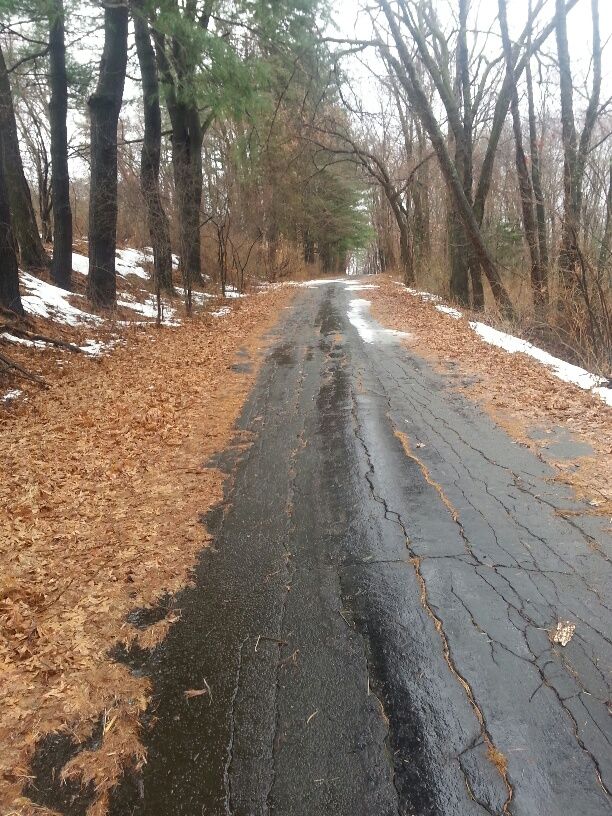
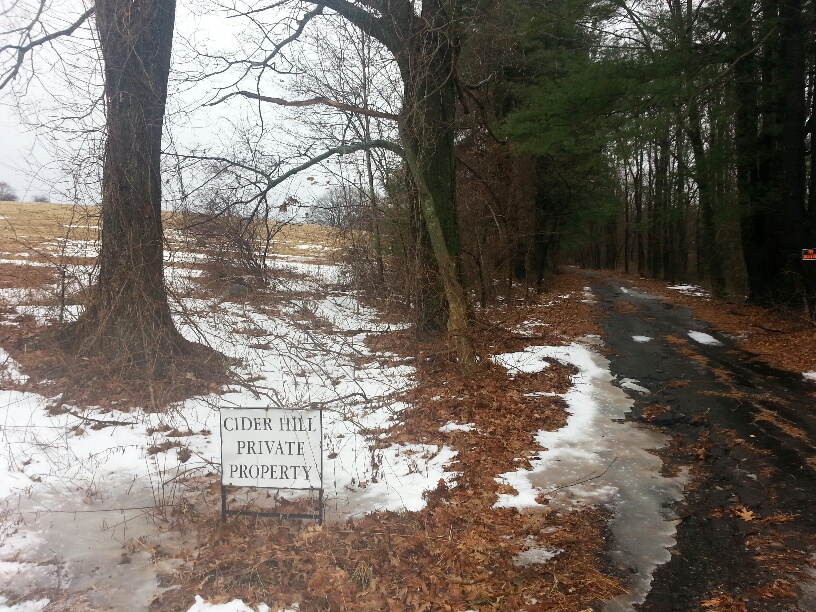
The road back down Cider Hill, about 1/10 mile.

s The road back down Cider Hill, about 1/10 mile.

Another view of southern guest house.  Probably where Eleanor Roosevelt stayed.

Another view of southern guest house. Probably where Eleanor Roosevelt stayed.

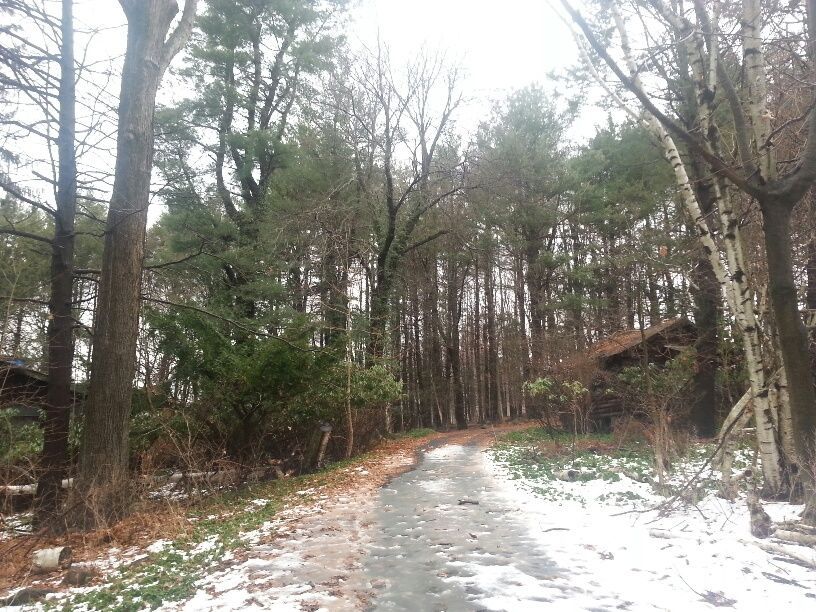
On the drive up toward the compound. Apple orchard is up and on the left side.

On the drive up toward the compound. Apple orchard is up and on the left side.

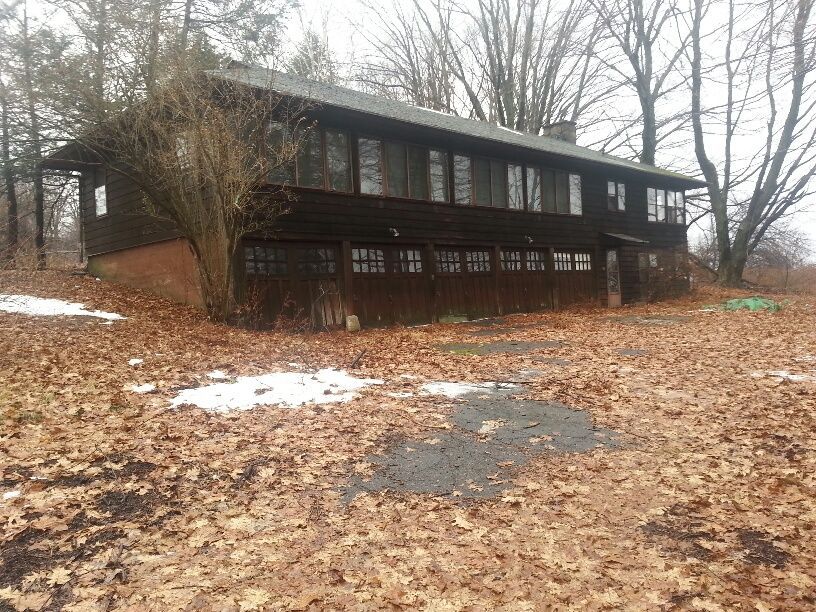
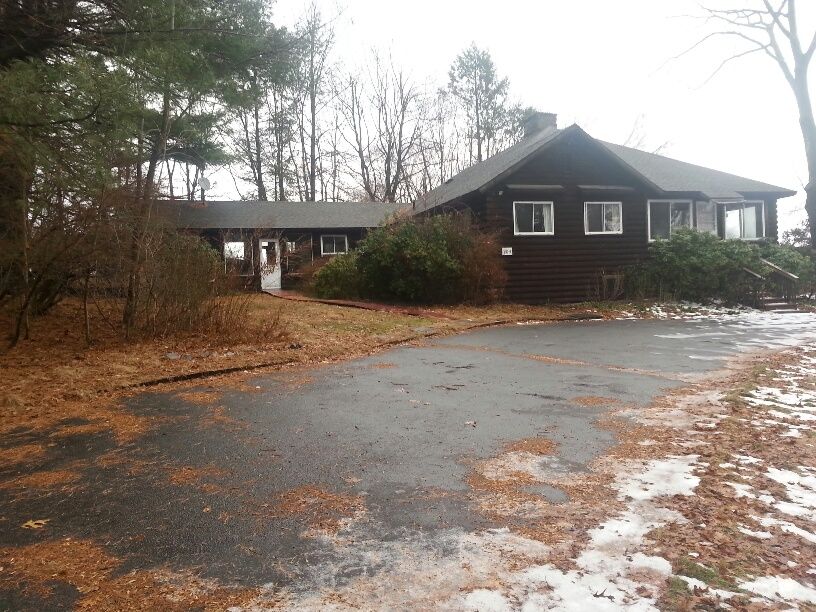
Southern guest house, also log structure. 4 bedrooms, 2 baths

Southern guest house, also log structure. 4 bedrooms, 2 baths

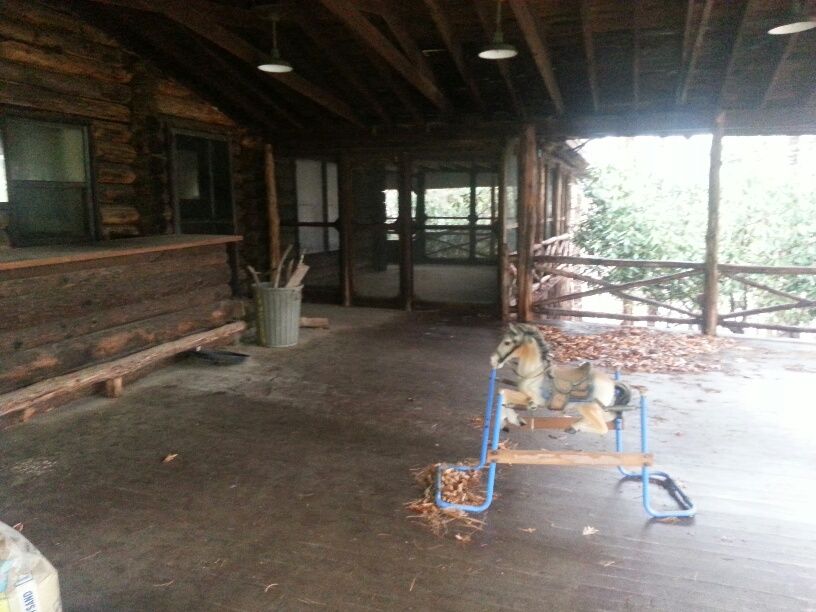
North side of rustic log cabin.

North side of rustic log cabin.

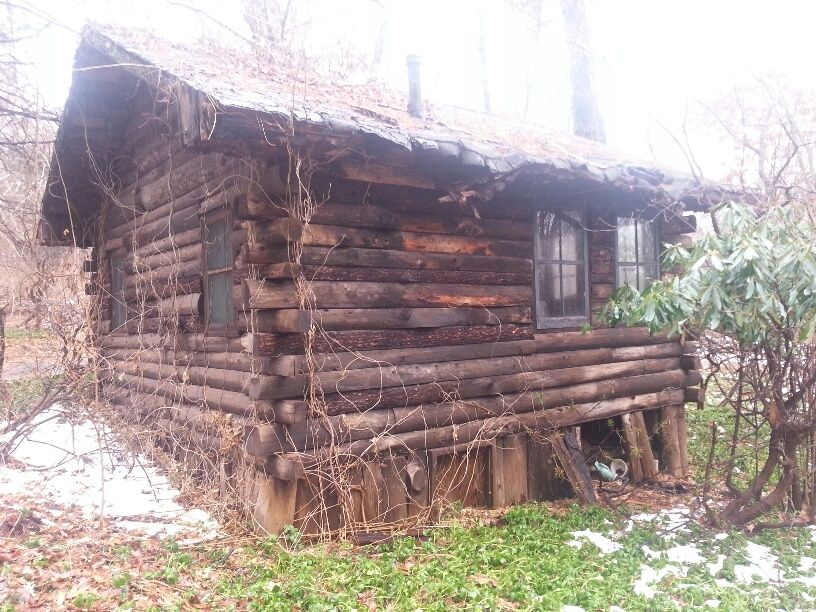
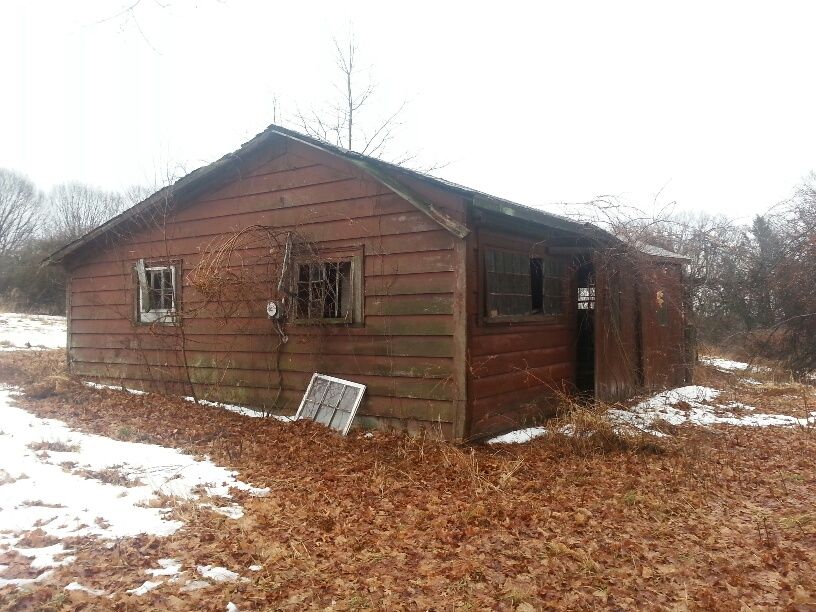
Very rustic one-room log cabin. Probably original structure.

Very rustic one-room log cabin. Probably original structure.

The tool shed

The tool shed

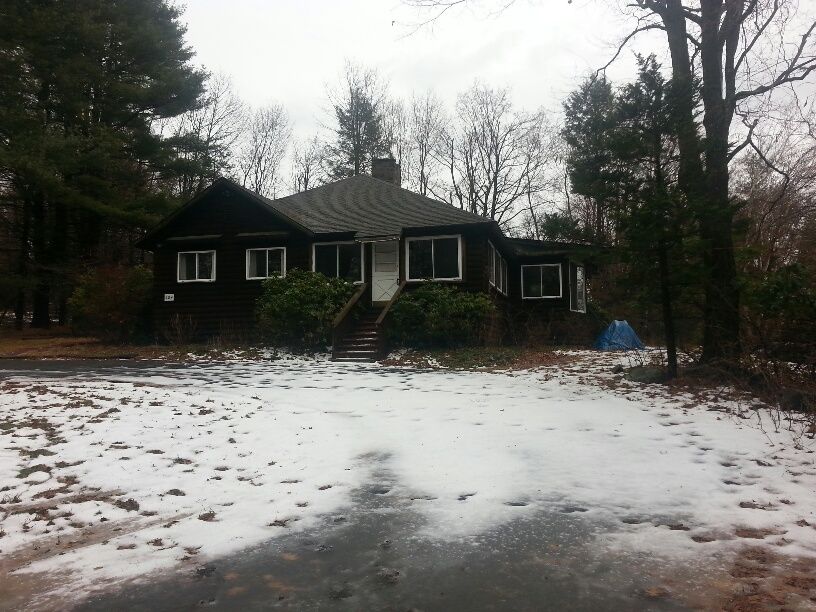
Most northerly log cabin, and most recently occupied.

Most northerly log cabin, and most recently occupied.

Another view of northern guest house.

Another view of northern guest house.

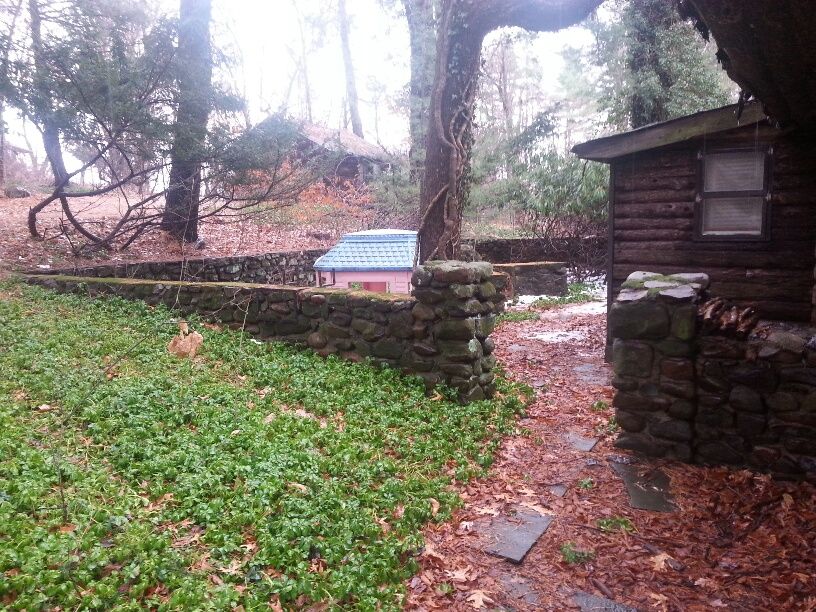
Beatrice Fox Auerbach's summer cottage, field stone structures in front.

Beatrice Fox Auerbach’s summer cottage, field stone structures in front.

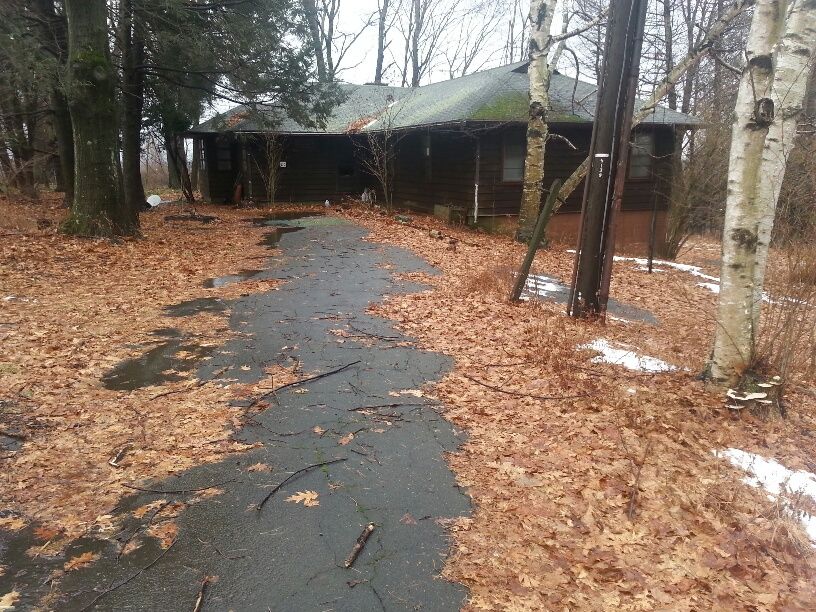
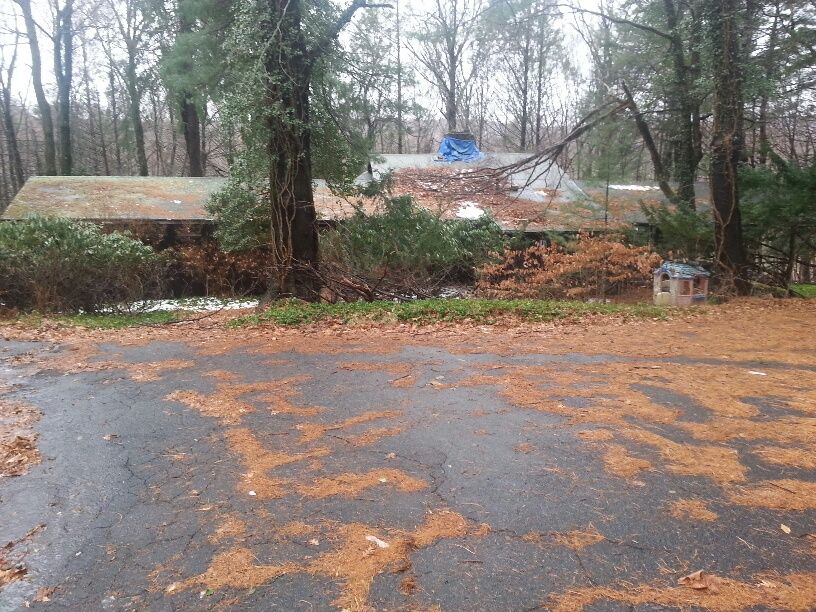
Main residence from front. Roof needs immediate attention.

Main residence from front. Roof needs immediate attention.

South side of Auerbach cottage.

South side of Auerbach cottage.

The beginning of the ascent

The beginning of the ascent

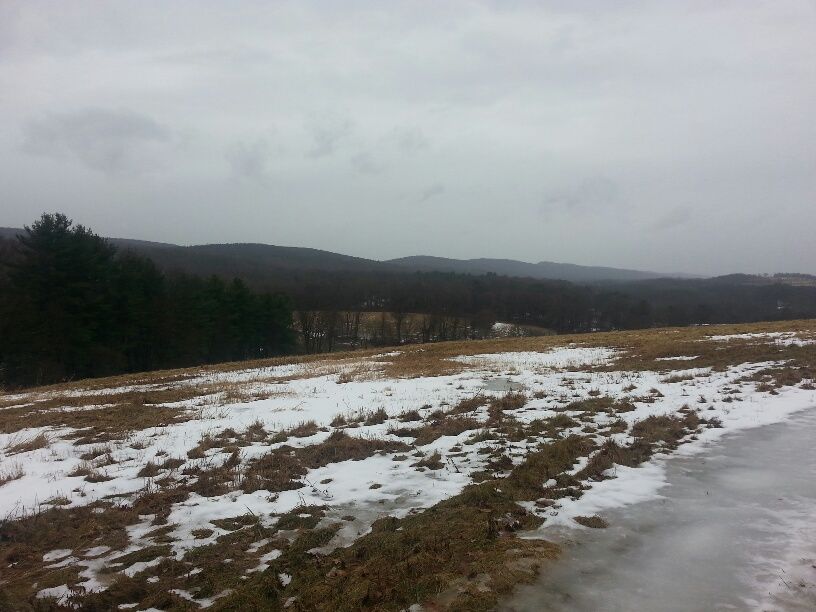
Looking away from Cider Hill, across the northern sector of the Auerfarm Education Center

Looking away from Cider Hill, across the northern sector of the Auerfarm Education Center

Standing at top of Cider Hill, in the apple orchard, looking east across the CT River Basin

Standing at top of Cider Hill, in the apple orchard, looking east across the CT River Basin

Looking west toward the Berkshires.

Looking west toward the Berkshires.

20140106_133124_resized_1

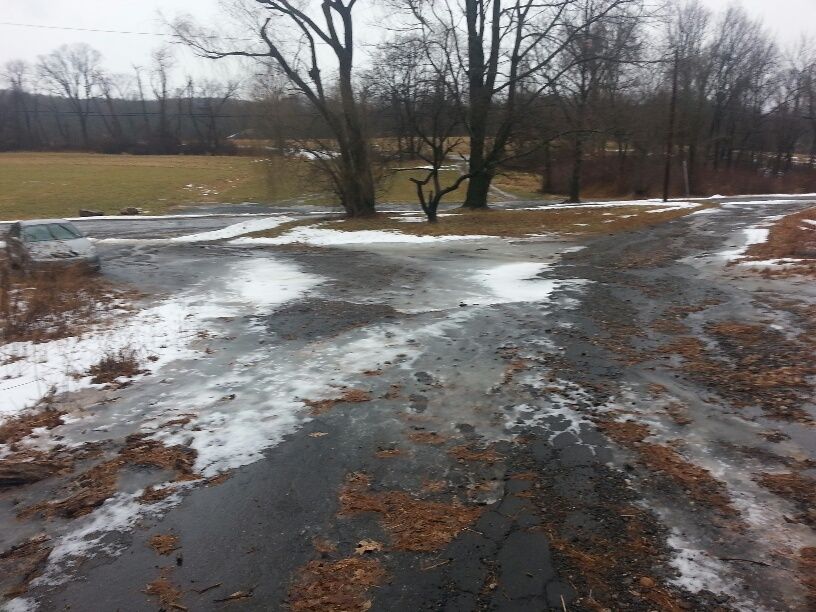
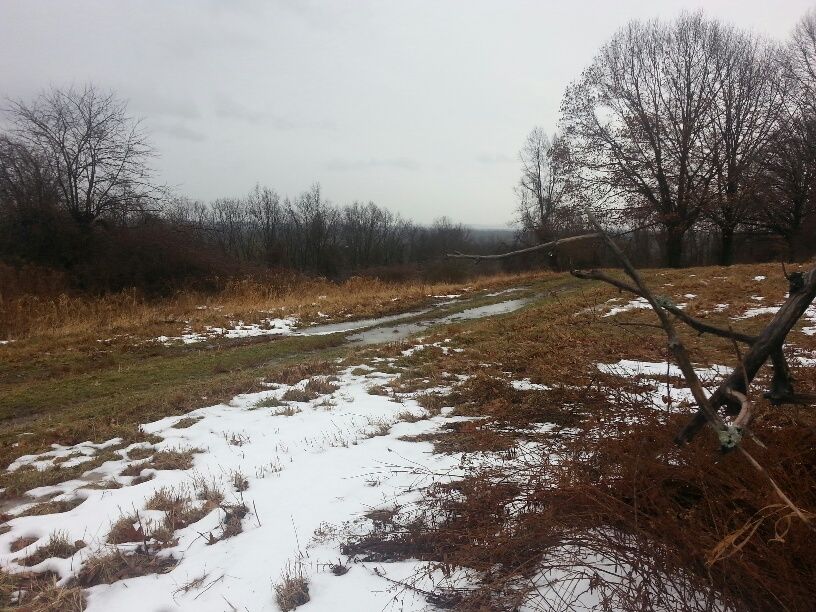
Coming toward the apple orchard on the crest of Cider Hill, on a rainy January afternoon.

Coming toward the apple orchard on the crest of Cider Hill, on a rainy January afternoon.

Looking west, from the top of Cider Hill, in October.

Looking west, from the top of Cider Hill, in October.

Standard
Uncategorized

The Global Cooperative Development Network: CQI PermaCulture Design Team Project

Day (0)


I woke up this morning remembering my Time Traveling Math Historian dream, wondering, actually kind of obsessed about it, like a schizophrenic trying to see through his meds.


But, Ivy had a poopy diaper, and so did Daquan, and Sunday morning rudely returned to Business As Usual.  Which is OK, I think.  I rather like Business As Usual at home.  It helps when we are all here, rather than just some of us.  It helps even more when all of us work together, rather than choosing not to invest in each other, at the time, and in the ways, and amounts of time, that I prefer.  Although, of course, I have never bothered to tell any of them what those ways and means might be.  Anyway, Business As Usual.


Today I have to design a PermaCulture Development class for the global Cooperative Economy Network, started by a consortium of social investors, public facilitators and community organizers, new economists, permaculture and ecology-missioned groups, intentional communities, including research cooperatives and funders, some public sector, most of the grant-making entities. In a sense I guess each of these subgroups is an intentional community, with its own language and justice issues, priorities, concerns, specific missions and vocations on behalf of our planet. Yet it feels like they share a common value and active disvalue infrastructure. I can see why this social constellation wants to look clear-eyed at their shared mission: to optimize Continuous Quality Improvement, natural growth, re-establish a global permacultured economy and ecology, inclusive of all species, with this Transition Generation, and the 7 generations to follow.


So that’s why I told them I would write up a cooperative contract proposal with them (not for them) and that proposal begins with asking each adult participating in this PermaCulture System Design training to bring one person under the age of 25 with them, if at all possible one of their own children, or a younger relative, down to the age of 12. These are the people that we all need to listen to about how to design their PermaCulture Planet.  In Group Development Theory they act as a Lie Group, but that is certainly not appropriate for this event.  I don’t know.  For now, let’s just go with the “Shaman Team” and the “Observing Team.”


OK, so let’s see. 


 NSF, Division of Social and Economic Sciences: Science of Organizations


Organizations — private and public, established and entrepreneurial, designed and emergent, formal and informal, profit and nonprofit — are critical to the well-being of nations and their citizens. They are of crucial importance for producing goods and services, creating value, providing jobs, and achieving social goals. So, how do we improve the design and emergence, development and deployment, and management and ultimate effectiveness of organizations of all kinds?


The Cooperative Economy Network (CEN) is committed to our fundamental understanding of how cooperative systems develop, form and operate. The PermaCulture Design Project will develop and refine Regenerative System Development Theory, and  develop new measures and standards for Continuous Quality Improvement of community and global development projects. Educational, Communication, and Information Systems implications may be of value to the business practitioner, policy-maker, educator, parent, and research communities.


The PermaCulture Design Project will illuminate aspects of organizations as organic systems of coordinated diversity, self-management, and inclusive governance.


Germane theoretical paradigms include (but are not limited to) organizational theory, behavior, sociology and economics, business policy and strategy, communication sciences, entrepreneurship, human resource management, information sciences, geometrics and Group Theory, Synergetics (B. Fuller), managerial and organizational cognition, operations management, public administration, social and industrial psychology, and technology and innovation management.

Phenomena studied will include (but are not limited to) value and power structures, iteration frequencies, choice-making effectiveness, competitiveness, innovation, communication  and Binary Information System dynamics, change and evolution.

Levels of analysis will include organizational, cross-organizational cooperative relationships, and global implications, and will include individual and team value metrics.

Research methods  include archival analyses, surveys, simulation, comparative case studies, and network analyses.


Intellectual merit: The Cooperative Economy Network’s final report will further articulate a Cooperative-Appositional System Theory of Evolution.


This Cooperative Development Research Project has the potential to provide globally inclusive societal benefits, meeting sustainable value optimization standards for a socially, culturally, and ecologically balanced cooperative economy.


First Day:


Facilitator:


Welcome, and thank you for saying yes to our invitation to spend some time listening and speaking with each other. Those around the walls are our Observer Team. They are also your parents, aunts, uncles, grandparents, or maybe even that crazy adult who asked you to do this with them, as a partnership. You around this inner circle are members of a Transition Generation, ages 12 to 24.


Here is what David Orr predicted for your future:  “The generation now being educated will have to do what we, the present generation, [this was published in 1997, so you would be 22 now if you had been in kindergarten at age 5 in 1997] have been unable or unwilling to do: stabilize a world population that is growing at the rate of a quarter of a million each day, stabilize and then reduce the emission of greenhouse gases, which threatens to change the climate—perhaps disastrously; protect biological diversity, now declining at an estimated rate of one hundred to two hundred species per day, reverse the destruction of rain-forests (both tropical and temperate), now being lost at the rate of one hundred and sixteen square miles or more each day; and conserve soils; now being eroded at the rate of sixty-five million tons per day.” You must “learn how to use energy and materials with great efficiency.” You “must learn how to utilize solar energy in all its forms.” You “must rebuild the economy in order to eliminate waste and pollution.” You “must learn how to manage renewable resources for the long term.” You “must begin the great work of repairing, as much as possible, the damage done to the earth in the past two hundred years of industrialization. And, you must do all of this while addressing worsening social and racial inequities. No generation has ever faced a more daunting agenda.” (Hannum, ed. Environmental Literacy: Education as if the Earth Mattered)


I believe the life trajectory situation of your children and their children has reached a transition era of crisis. Those of us in this room are hear to listen to what your experience has been like so far, and what you think you might like to do as a Transition Generation before your kids arrive (if kids are in your future) and maybe even with your kids as you imagine your adult futures.


We begin today with three fundamental questions for each of you.  In the first round we will ask these questions in reference to what happens in this room, with and to these people.  Then we will talk about the same three questions in reference to what happens outside this room, with everybody else.


1.  What interests you most? What is the creative or learning scenario that feels most compelling to you? You would do more of what if you could?  If you had the resources, time, money, property, health, education? What seems most compelling to you right now, in this situation, that we might even be able to do together here?


[High faith power indicator.]


2.  What makes you angry, gets you really riled up? What is the specific scenario that is most likely to get you to erupt, that could conceivably happen to one or more people in this room, yourself included? What will really tick you off if somebody does it, or doesn’t do it, today?


[High hope for justice, equity, mutual respect.]


3. What makes you sad.  What is the scenario in which you are most likely to imagine yourself as lonely, isolated, incapacitated, depressed that could happen to you today?  What would really shut you down and out, and make it impossible for you to care to participate any further? Imagine yourself really sad and hopelessly bored by mid-afternoon today, what happened to get you into that mental space?


[High enthymematic reverse-resolution.  Compare to “1” above.]

Standard